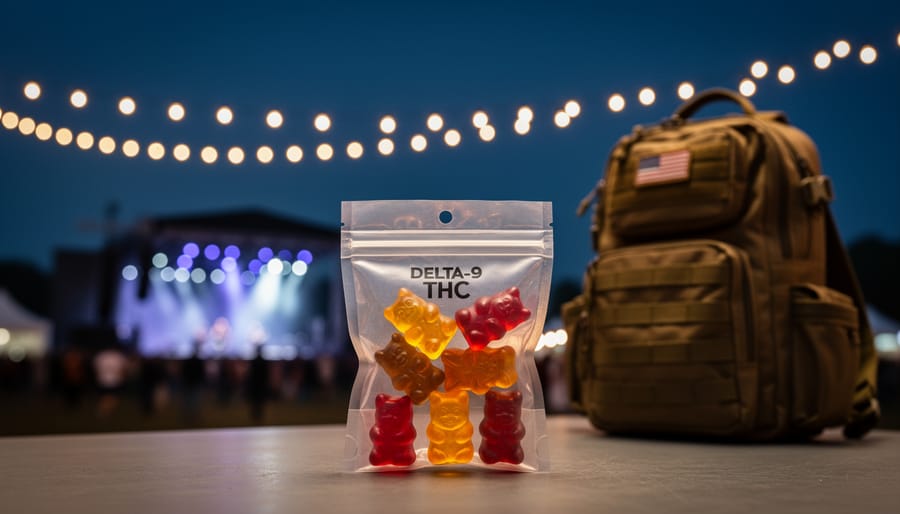
Close-up of hemp-derived delta-9 gummies with festival lights and a distant stage blurred in the background.

What Are Delta 9 Gummies (and How Do They Work at Music Festivals)?

Delta 9 gummies are hemp-derived edible products that contain delta-9-tetrahydrocannabinol (THC), the primary psychoactive compound in cannabis, formulated to comply with federal regulations by staying at or below 0.3% THC by dry weight. These gummies deliver cannabinoid effects in a convenient, discreet format that has become increasingly visible in music festival culture and touring environments since 2024.
For musicians and music industry professionals, understanding Delta 9 gummies matters beyond personal choice. These products occupy legal grey areas that vary dramatically across Canadian provinces and international …

Two people collaborating on a musician’s studio desk using a laptop and tablet for design work, with music-themed items in the background.

Figma for Musicians: A Collaborative Design Tool Transforming Visual Identity and Branding

Figma is a collaborative, cloud-based design platform that lets you create professional graphics, layouts, and visual assets directly in your web browser without installing software or paying upfront costs. For musicians and music industry professionals, it offers a practical way to design everything from album covers and social media graphics to press kits and tour posters, giving you creative control over your visual brand without relying on expensive designers for every project.
Unlike traditional design software that requires installation, file management, and often steep learning curves, Figma runs entirely online and saves …

A Canadian music creator works in a studio with instruments and sheet music while abstract radio and streaming light trails suggest royalty collection and distribution.

Recognition Music Groups: Organizations That Champion Fair Compensation and Music’s True Value

Recognition music groups are organizations that collect and distribute royalties to songwriters, composers, and music publishers when their works are publicly performed, broadcast, or streamed. In Canada, these performing rights organizations serve as essential intermediaries between creators and the businesses that use their music, ensuring artists receive fair compensation for their intellectual property. SOCAN (Society of Composers, Authors and Music Publishers of Canada) stands as the primary recognition music group for Canadian creators, managing rights and royalties for over 175,000 members.
These organizations operate on a …

“Musician using design tools to assemble color swatches and shapes for album cover visuals on a desk beside a laptop and drawing tablet”

How to Choose an Online Graphic Design Program: A Buying Guide for Musicians and Artists

Choosing the right online graphic design program means matching your creative goals with the format, time investment, and practical skills you need to build album art, stage visuals, and merchandise that represent your music authentically. Musicians and music industry professionals increasingly handle their own branding, and formal training in design fundamentals, typography, and digital tools can transform rough ideas into polished, professional visuals that connect with audiences. The decision hinges on three core factors: whether you need a full certificate or targeted software training, how much structured feedback and portfolio …

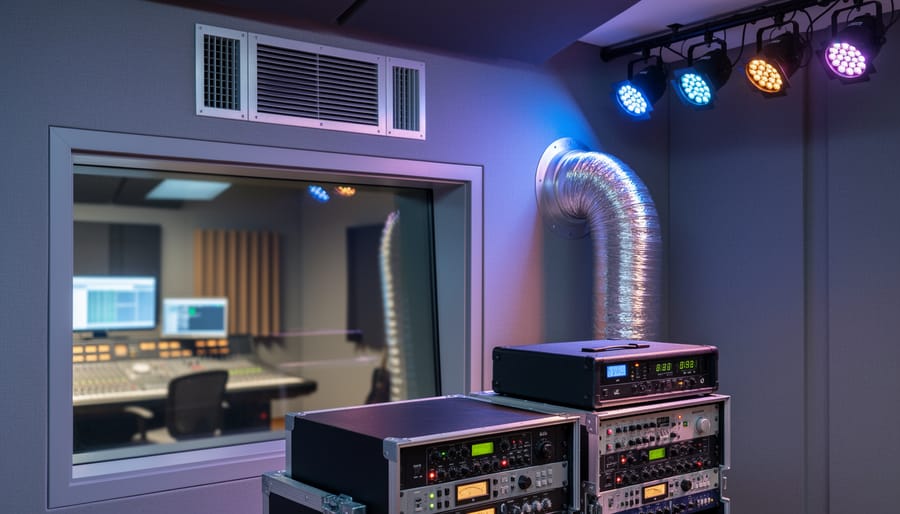
Music studio interior showing an HVAC vent and exhaust duct near stage lighting and audio equipment, suggesting ventilation and efficiency maintenance.

Your Practice Space Could Be Costing You Thousands (Here’s How to Fix It)

Audit your music facility’s HVAC systems and commercial dryer vent cleaning schedules now. Studios, rehearsal spaces, and performance venues across Canada waste thousands annually on inefficient climate control while simultaneously creating fire hazards through neglected ventilation maintenance. A thorough assessment identifies air leaks around studio doors, outdated insulation in control rooms, and clogged exhaust systems that force your heating and cooling units to work overtime.
Replace standard incandescent stage and studio lighting with LED …

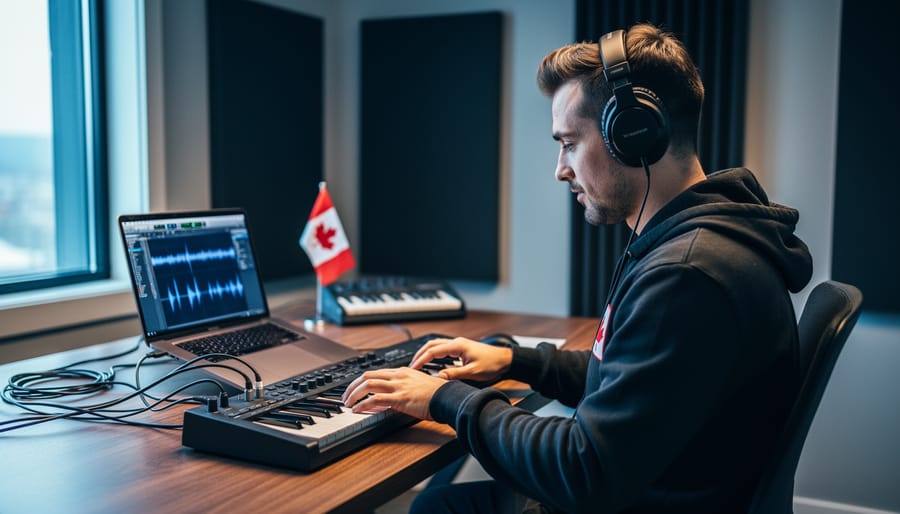
A Canadian music creator composing in a studio with headphones and a MIDI keyboard, illustrating protecting and licensing music rights.

Music Licensing Rights Explained: What Every Canadian Creator Needs to Protect Their Work

Your music has value the moment you create it, but protecting and monetizing that value requires understanding the distinct rights embedded in every song. In Canada, two separate copyrights exist simultaneously: one for the musical composition (lyrics and melody) and another for the sound recording. These rights operate independently, each with specific licensing pathways that determine how you earn money when your music is performed, broadcast, streamed, synchronized with visual media, or reproduced.
The landscape shifted significantly in 2024 when changes to Canada’s Copyright Act strengthened creator protections, yet many …