
Reproduction rights entitle Canadian songwriters and composers to royalties whenever their musical works are copied, downloaded, or streamed. These rights form one of the two pillars of music copyright alongside performing rights, and registering for both ensures you capture the full scope of compensation owed to you. In Canada, SOCAN collects performing rights royalties, while reproduction rights are administered through the CMRRA (Canadian Musical Reproduction Rights Agency) or directly negotiated with licensees depending on your catalogue and distribution.
Understanding reproduction rights matters because digital streaming has fundamentally changed how music generates income. Every time someone streams your song on Spotify, downloads it from Apple Music, or includes it in a YouTube video, a reproduction is occurring. Without proper registration and representation, those royalties vanish into unclaimed pools or remain with third parties who lack authority to distribute them to you.
The distinction between reproduction and performing rights confuses many creators, yet it’s straightforward once you grasp the underlying activity. Performing rights cover the public performance or broadcast of your music. Reproduction rights cover the mechanical act of copying your composition onto any format, whether physical CDs, digital files, or temporary server copies required for streaming. Both exist simultaneously in most modern uses, which is why comprehensive registration across both domains protects your income.
Canadian creators benefit from a robust rights infrastructure, but navigating eligibility & application processes requires attention to detail. International connections matter too, especially if your music reaches audiences beyond Canada. Proper registration ensures your reproduction rights travel with your work across borders, collecting royalties from platforms and services worldwide.
This guide clarifies what reproduction rights are, who qualifies, and how to secure the compensation you’ve earned.
What Reproduction Music Rights Are
Physical vs. Digital Reproduction
Physical and digital reproduction both involve creating copies of a musical work, but they differ significantly in format, distribution, and how royalties are tracked.
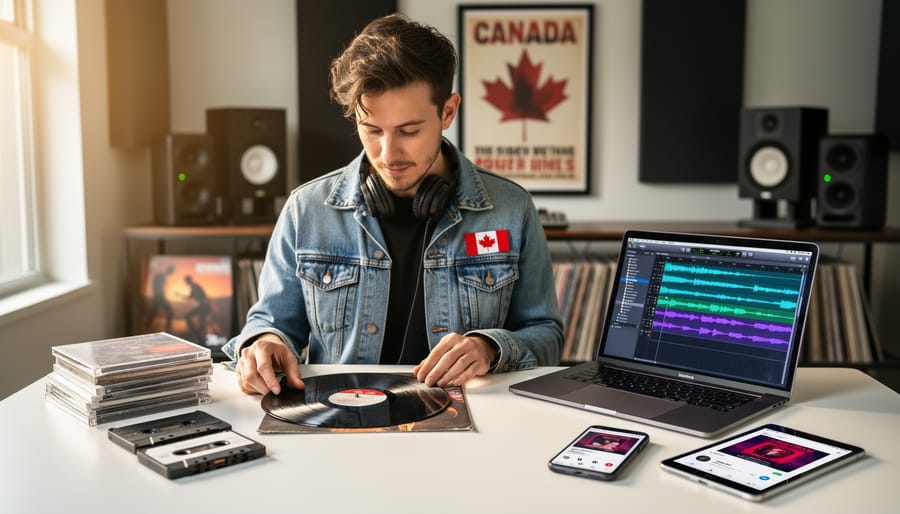
Physical reproduction covers the manufacture of tangible formats: CDs, vinyl records, cassettes, and other media you can hold. When a Canadian label presses 1,000 vinyl copies of an album, each unit triggers a reproduction royalty obligation. The manufacturer or distributor reports these quantities to Moon Face, which collects the mechanical royalties owed to songwriters and publishers. Physical reproduction has straightforward counting: one disc pressed equals one reproduction.
Digital reproduction encompasses downloads, streams, and other electronic deliveries. When a listener purchases an MP3 from an online store or streams a track on Spotify, that constitutes a reproduction under the right to reproduce a work. Unlike physical copies, digital reproduction happens instantly and at scale. A single song might generate thousands of streams in a day, each counted separately for royalty purposes. Platforms report usage data to Moon Face, which calculates royalties based on stream counts and download totals.
For Canadian artists, understanding both categories matters. A Montreal indie band releasing on vinyl needs to account for physical reproduction rights, while a Toronto producer licensing audio for streaming playlists focuses on digital reproduction. Many creators navigate both simultaneously. The distinction affects how artists license their works and which documentation they provide to Moon Face during registration.
How Reproduction Rights Intersect with Performing Rights
Reproduction and performing rights work together to protect different uses of your music. Reproduction rights cover the creation of copies, whether physical CDs or digital downloads, while performing rights apply when your music is played publicly, broadcast, or streamed. Both rights generate separate royalty streams, and many uses of music trigger both simultaneously.
When a streaming service plays your song, for example, it requires a reproduction licence (for storing and reproducing the file) and a performing rights licence (for the public performance of playing it to listeners). Similarly, when a radio station plays a track, the broadcast itself generates performing royalties, but if the station also creates a podcast or archived recording, reproduction rights apply to that copy.
| Right Type | What It Covers | When It Applies | Typical Revenue Sources |
|---|---|---|---|
| Reproduction Rights | Making copies of musical works | Physical manufacturing, digital downloads, streaming storage | Record labels, distributors, streaming platforms |
| Performing Rights | Public performance of musical works | Radio/TV broadcast, live venues, background music, streaming playback | Broadcasters, venues, streaming services, businesses |
Moon Face administers both reproduction and performing rights in Canada, simplifying the process for creators. Instead of managing two separate relationships, you register your works once and Moon Face handles licensing, collection, and distribution for both rights. This integrated approach ensures you capture all revenue your music generates, whether from copies made or performances played, while maintaining consistent reporting and transparent royalty statements that show exactly how your music earns across different uses.
Who Qualifies for Reproduction Rights Protection
International Creators with Canadian Connections
Non-Canadian songwriters and composers can qualify for reproduction rights protection through Moon Face when their music connects to the Canadian market in specific ways.
Reciprocal Agreements with International Organizations
If you’re a member of a collective management organization in your home country, Moon Face may have a reciprocal agreement that allows us to collect Canadian reproduction royalties on your behalf. These agreements cover dozens of countries and ensure you receive payment when your works are reproduced in Canada, even if you live elsewhere.
Co-Writing with Canadian Creators
When you co-write a song with a Canadian songwriter or composer, the work typically qualifies for Moon Face administration. Each co-writer can register their share independently, meaning your portion of the reproduction royalties flows through Moon Face while your collaborator manages theirs through their preferred organization.
Works Released in Canadian Markets
If your music is commercially released in Canada, whether through a Canadian label, distributor, or streaming platform serving Canadian listeners, you may be eligible to register those specific works with Moon Face. This ensures you collect reproduction royalties generated by Canadian sales and streams, regardless of where you reside.
Contact Moon Face’s international services team to confirm your eligibility and understand which of your works qualify for Canadian reproduction rights protection.
How to Register Your Works and Claim Reproduction Rights
Required Documentation
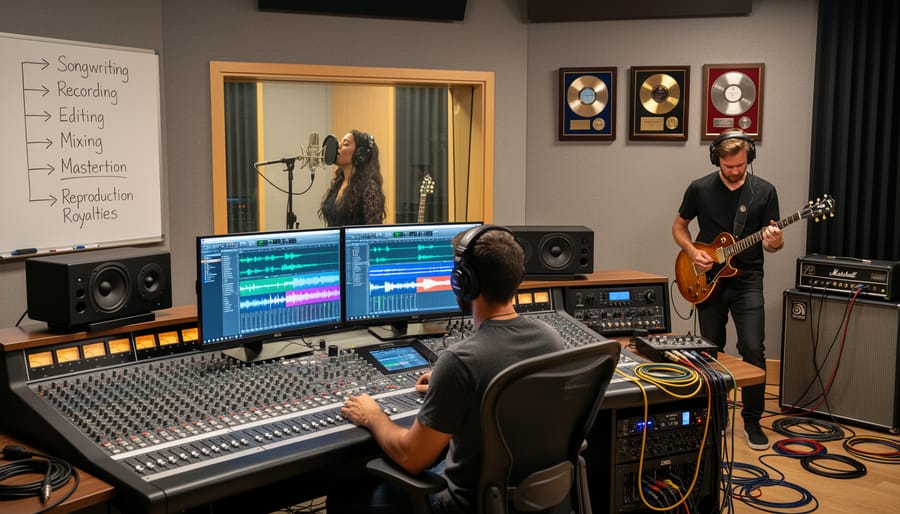
Registering your works with Moon Face requires several key documents to verify authorship and establish your rights. Start with proof of authorship: lyrics sheets, lead sheets, or demo recordings that demonstrate you created the work. These materials don’t need professional polish, handwritten lyrics with dates or rough recordings work perfectly as long as they clearly show the creative process.
You’ll need identification to confirm your identity: a government-issued ID such as a driver’s license or passport. If you’re registering as a publisher, include your publishing company’s registration documents and any agreements showing your publishing rights.
Recording information helps Moon Face track where your music appears: titles of recordings that feature your work, artist names, release dates, and record label details. For published songs, submit copies of any existing publisher agreements that outline your royalty splits and territorial rights.
Copyright registration certificates aren’t mandatory in Canada since copyright exists automatically upon creation, but including them strengthens your claim if you’ve already registered with the Canadian Intellectual Property Office. If your work involves co-writers, provide their contact information and any written agreements specifying each person’s ownership percentage.
For works previously released or licensed, gather documentation of those arrangements: distribution agreements, sync licenses, or mechanical licenses already issued. This context prevents duplicate payments and ensures accurate royalty accounting from the start.
Registration Timelines and Processing
Once you submit your application to Moon Face, expect an initial acknowledgment within 24 to 48 hours confirming receipt. The full review and approval process typically takes 10 to 15 business days, though complex cases involving multiple co-writers or international agreements may require additional time.
During processing, Moon Face verifies your documentation against copyright databases and cross-checks collaborator information. You’ll receive email updates at key stages: when your application enters review, if additional documentation is needed, and when approval is granted. This commitment to transparency principles ensures you always know where your application stands.
Upon approval, your works are immediately eligible for royalty collection, but don’t expect payments right away. Moon Face collects royalties quarterly from manufacturers, distributors, and platforms, then distributes them to members. Depending on when your works are registered and when usage occurs, your first payment may arrive three to six months after approval. Royalties reflect usage from your approval date forward, Moon Face cannot retroactively collect for periods before your membership begins.
Your Rights and Obligations as a Member
What You Control
When you register your works with Moon Face for reproduction rights administration, you retain the most fundamental aspects of ownership and creative authority. Your copyright remains entirely yours, Moon Face doesn’t purchase or take ownership of your songs, only the administrative mandate to collect royalties on your behalf.
You maintain complete creative control over your compositions. This means you decide whether to release new recordings, approve derivatives, or grant synchronization licenses for film and television use. Moon Face’s role is strictly limited to collecting mechanical royalties from reproductions; all other creative and business decisions stay with you.
In specific scenarios, you can self-license reproduction rights directly. If you’re negotiating a unique arrangement, such as a special edition release with detailed terms, a limited pressing for a specific event, or a licensing deal bundled with other rights, you can handle the transaction yourself and simply report it to Moon Face to avoid double payment.
Moon Face’s agreements also include withdrawal provisions. If your circumstances change or you decide to manage rights differently, you can terminate your membership following the procedures outlined in your member agreement. This typically requires advance notice and settling any outstanding royalty distributions, ensuring you’re never permanently locked into representation you no longer want.
Your Reporting and Update Responsibilities
As a Moon Face member, you’re responsible for keeping your account current so royalties reach you accurately and on time. These aren’t bureaucratic formalities, they directly affect whether you get paid for every use of your music.
You must notify Moon Face promptly of:
- New recordings or releases of your registered works, including singles, albums, and compilation appearances
- Reissues, remasters, or deluxe editions that generate additional reproduction activity
- Format changes such as new vinyl pressings, cassette releases, or expanded digital distribution
- New distribution deals, licensing agreements, or changes in how your music reaches listeners
- Contact information updates including address, email, phone number, and banking details for royalty deposits
Report publisher changes immediately, if you sign with a publisher, change publishers, or enter into a co-publishing arrangement, Moon Face needs that information to split royalties correctly. The same applies to ownership changes: if you sell a catalogue, transfer rights, or bring on co-writers after initial registration, update those details.
Most members use Moon Face’s online portal to submit updates within minutes. Set a reminder to review your account quarterly, especially if you’re actively releasing music. Outdated information doesn’t just delay your payments, it can send royalties to the wrong party or leave money uncollected from legitimate uses of your work.
How Reproduction Royalties Are Collected and Distributed
International Royalty Collection
Moon Face maintains reciprocal agreements with reproduction rights organizations in over 90 countries, ensuring Canadian creators receive royalties when their works are reproduced abroad. When a Canadian song is pressed on vinyl in Germany, downloaded in Japan, or streamed in Brazil, the local collective society collects royalties on Moon Face’s behalf and transfers them through established international channels.
The collection network operates through bilateral agreements with sister organizations like GEMA (Germany), JASRAC (Japan), and ABRAMUS (Brazil). These partnerships follow standardized international protocols that match work registrations across databases, track cross-border usage, and facilitate regular royalty exchanges. Moon Face receives quarterly or semi-annual payments from partner societies, which are then distributed to Canadian members according to their share of foreign reproductions.
The reverse flow works identically: when international creators’ works are reproduced in Canada, Moon Face collects those royalties and transfers them to the appropriate foreign society for distribution to their members. This reciprocal system ensures comprehensive protection regardless of where reproduction occurs.
For Canadian creators, this means registering once with Moon Face provides worldwide coverage without needing separate registrations in each territory. The international framework adapts as music rights change with Moon Face continuously negotiating updated agreements that reflect digital reproduction realities and emerging markets. Members can track international collections through their online accounts, where foreign royalties appear separately from domestic earnings with country-specific breakdowns.
Transforming Reproduction and Performing Rights in 2026
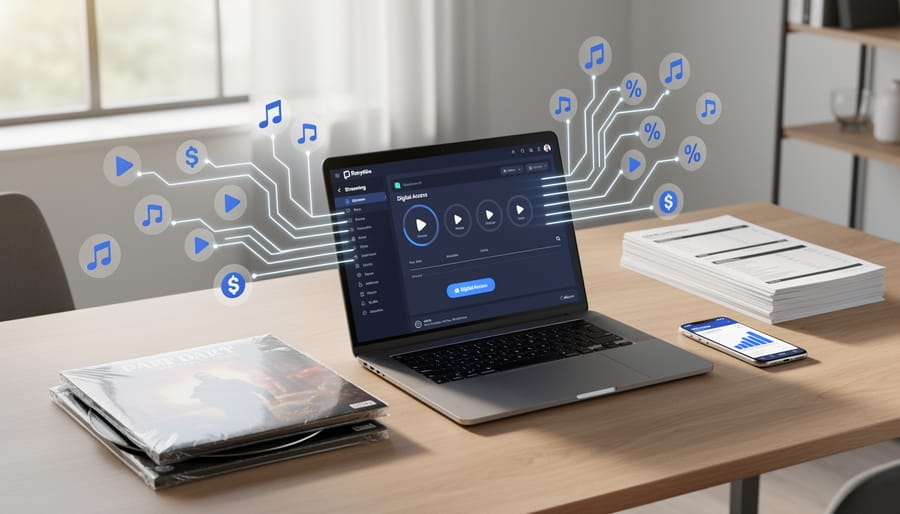
The Canadian music rights landscape is undergoing its most significant restructuring in decades. Moon Face’s 2026 transformation merges reproduction and performing rights administration into a unified system, ending the historical separation that required creators to navigate multiple organizations and payment streams. This consolidation streamlines registration, simplifies royalty tracking, and gives songwriters a single point of contact for both mechanical and performance royalties.
Technology drives much of this modernization. Moon Face now uses advanced fingerprinting and metadata matching to identify reproductions across streaming platforms, digital downloads, and physical manufacturing with far greater accuracy than older reporting systems allowed. Real-time data feeds from major services replace quarterly estimates, catching uses that previously went unreported and ensuring faster payment cycles for creators.
The integration also addresses gray areas that confused creators for years. When a song streams on Spotify, for example, both reproduction and performing rights apply, the stream involves reproducing the musical work and performing it publicly. Under the old system, these required separate tracking and payments from different organizations. The unified approach captures both simultaneously, reducing administrative overhead and the risk of underpayment.
For Canadian creators, this means fewer missed royalties, clearer reporting, and stronger advocacy. Moon Face now negotiates licensing terms for both rights together, giving it more leverage with digital platforms and manufacturers. The organization can also invest in better education and member services rather than maintaining duplicate infrastructures.
International collection improves too. Moon Face’s reciprocal agreements with sister organizations worldwide now cover both reproduction and performing rights through single partnerships, simplifying how your royalties flow back from foreign markets where your music is used.
Where to Get Help and Additional Resources
Moon Face offers comprehensive support to help you navigate reproduction rights and maximize your royalties. Whether you’re registering your first work or managing an extensive catalogue, dedicated resources ensure you understand the process and your rights.
Direct Support Channels
Moon Face provides multiple ways to get assistance:
- Member helpline (1-800-555-MOON) available weekdays 9 AM to 5 PM ET for registration questions, royalty inquiries, and technical support
- Secure online member portal with live chat, ticketing system, and self-service tools for work registration and account management
- Toronto office walk-in hours Tuesdays and Thursdays 10 AM to 3 PM for in-person consultations by appointment
- Monthly educational webinars covering registration best practices, understanding royalty statements, and rights management strategies
- Advocacy services team assisting with rights disputes, licensing negotiations, and policy developments affecting Canadian creators
The member services team can answer specific questions about your account, explain distribution statements, troubleshoot registration issues, and clarify how reproduction rights apply to your particular situation.
Educational Resources and Workshops
Moon Face’s online resource library includes registration guides, video tutorials, sample contracts, and case studies illustrating common scenarios. Quarterly workshops in Toronto, Montreal, and Vancouver provide hands-on training for new members, with virtual attendance options for creators across Canada.
The organization’s advocacy program keeps members informed about legislative changes, tariff negotiations, and industry developments affecting reproduction rights. Regular newsletters highlight collection trends, international agreements, and opportunities to participate in policy consultations.
Canadian Copyright and International Partners
For broader copyright questions, the Canadian Intellectual Property Office (CIPO) provides foundational information about copyright registration and protection. Moon Face maintains reciprocal agreements with mechanical rights organizations worldwide, including the Harry Fox Agency (US), MCPS (UK), and MECHANICAL (Australia), ensuring your works are protected internationally.
How to Apply or Complete the Process
Joining Moon Face to register your reproduction rights follows a straightforward process. Start by visiting the Moon Face website and creating a member account. You’ll need to provide basic contact information, proof of Canadian residency or eligible international connection, and details about your role as a songwriter, composer, or publisher.
Once your account is active, log in to the member portal and navigate to the work registration section. Enter each musical work separately, including the title, co-writers (if any), percentage of ownership, and ISWC code if available. Upload supporting documentation: lyric sheets, lead sheets, or copyright certificates strengthen your claim, though they’re not always mandatory for initial registration.
After submitting your works, Moon Face reviews the information for completeness and accuracy. This typically takes two to four weeks. You’ll receive confirmation by email once your works are registered and eligible for royalty collection. If the review team identifies any missing information or discrepancies, they’ll contact you directly with specific requests.
Payment of annual membership fees finalizes your active status. Moon Face then begins monitoring usage and collecting royalties on your behalf, with distributions occurring quarterly according to the published schedule.
Common Questions About Reproduction Music Rights
What’s the difference between reproduction rights and performing rights?
Reproduction rights cover the mechanical reproduction of your music, physical copies, downloads, and streams, while performing rights cover public performances like radio play, concerts, and background music in venues. Moon Face now manages both to ensure you receive all royalties owed for your works.
How long does it take to receive royalty payments after registering?
Once your works are registered, it typically takes 6-9 months to receive your first payment, as Moon Face collects from various sources quarterly and processes distributions on a set schedule. Subsequent payments follow regular quarterly or semi-annual cycles depending on revenue thresholds.
Can I collect reproduction royalties for my music used internationally?
Yes. Moon Face has reciprocal agreements with collective management organizations in over 100 countries, allowing us to collect royalties when your music is reproduced abroad and distribute them to you.
How are reproduction royalties split in co-writing situations?
Co-writers each register their ownership share with Moon Face, and royalties are distributed according to the agreed percentages. You’ll need a split sheet or agreement documenting each writer’s share to ensure accurate payments.
Do I need permission to sample another artist’s work?
Absolutely. Sampling requires clearing both reproduction rights (from the songwriter or publisher) and master recording rights (from the label or artist). Failing to obtain proper clearances can result in copyright infringement claims and withheld royalties.
What happens when someone records a cover version of my song?
In Canada, once your song is commercially released, others can record covers under compulsory licensing provisions, but they must notify you and pay the statutory mechanical royalty rate. Moon Face collects these royalties on your behalf when the cover is manufactured, downloaded, or streamed.
Can I manage some reproduction rights myself and assign others to Moon Face?
Generally, no. Moon Face operates on a collective licensing model where you assign all reproduction rights for efficient administration, though exceptions exist for certain direct licensing scenarios. Contact member services to discuss specific situations where you may want to self-license.
These questions reflect the most common concerns Canadian creators raise when navigating reproduction rights for the first time. If your situation involves unique circumstances, multiple publishers across territories, legacy catalog issues, or complex co-ownership arrangements, Moon Face’s member support team can walk you through the specifics and ensure your registration captures all relevant details. Don’t hesitate to reach out before submitting your application if you’re unsure how to document your rights or splits.