
The 5 Transparency Principles are a landmark framework requiring collective management organizations to provide music creators and rights holders with clear, accessible information about royalty distributions, repertoire usage, and licensing terms. Established by the International Confederation of Societies of Authors and Composers (CISAC) in 2015 and adopted globally, these principles give you enforceable rights to know how your music is being used, where your royalties come from, and how they’re calculated.
For Canadian songwriters, composers, and publishers, these transparency standards apply directly through SOCAN, CMRRA, and other collective societies that manage performing and reproduction rights. Whether you’re a member of a Canadian collective or collecting international royalties, you’re entitled to detailed statements, comprehensive databases of your works, and responses to your queries within defined timeframes. The principles also apply when your music generates revenue abroad through reciprocal agreements with foreign societies.
This framework emerged from decades of advocacy by creators and fair compensation groups frustrated by opaque royalty systems, delayed payments, and unexplained deductions. The 5 Transparency Principles transform these longstanding grievances into binding obligations, shifting power back to creators by mandating regular reporting, searchable work databases, accessible governance structures, clear distribution rules, and responsive member services.
Understanding these principles isn’t just about knowing your rights. It’s about actively using transparency tools to track your earnings, identify missing royalties, verify your work registrations, and hold collecting societies accountable. The following guide breaks down each principle, shows you how to access the transparency mechanisms already available to you, and connects you with resources to ensure you’re getting everything you’ve earned.
What the 5 Transparency Principles Are

The five transparency principles represent a fundamental shift in how reproduction and performing rights organizations manage and communicate with their members. These principles emerged from decades of advocacy by creators who demanded clearer visibility into how their music generates revenue and how royalties flow from usage to payment.
Clear Royalty Reporting requires that societies and organizations provide itemized statements showing exactly where revenue comes from. Instead of a single lump sum marked “royalties,” you receive breakdowns by usage type (radio play, streaming, public performance, mechanical reproduction), territory, and time period. For Canadian songwriters registered with SOCAN or CMRRA, this means seeing which radio stations played your song, how many streams it accumulated on each platform, and what percentage of the total royalty pool your work captured. The principle mandates a standard format that lets you compare statements across quarters and identify trends in your catalogue’s performance.
Accessible Licensing Information ensures you can see who holds licenses to use your work and under what terms. Reproduction and performing rights organizations maintain databases showing which venues, broadcasters, streaming services, and businesses have blanket licenses that cover your music. You gain the ability to verify that licensed users are actually reporting your works correctly and that unlicensed users aren’t exploiting your catalogue. This principle also covers access to the licensing agreements themselves, so you understand the rate structures that determine your earnings.
Open Data Sharing takes transparency beyond individual statements to industry-wide visibility. Organizations now publish aggregated usage data, payment timelines, distribution methodologies, and even board meeting minutes. Rights advocacy organizations pushed for this principle because systemic issues only become visible when creators can see patterns across the entire membership. Canadian artists benefit from comparing domestic data with international standards, identifying discrepancies in how different territories value the same usage types.
Timely Payment Communication establishes clear schedules for when royalties are calculated, processed, and distributed. Organizations commit to fixed payment cycles and notify members of any delays with explanations. If a streaming service is late submitting usage reports, you’re informed before your expected payment date passes. This principle eliminates the guessing game that plagued earlier rights administration, where payments arrived unpredictably and without advance notice.
Transparent Dispute Resolution creates formal processes for challenging royalty calculations, missing payments, or data errors. You receive written explanations of how disputes are investigated, who reviews them, and what timelines govern resolution. The principle requires organizations to document their decisions and provide appeals mechanisms, protecting creators from arbitrary rulings that favour administrative convenience over accuracy.
Who Qualifies for Transparency Rights and Protections
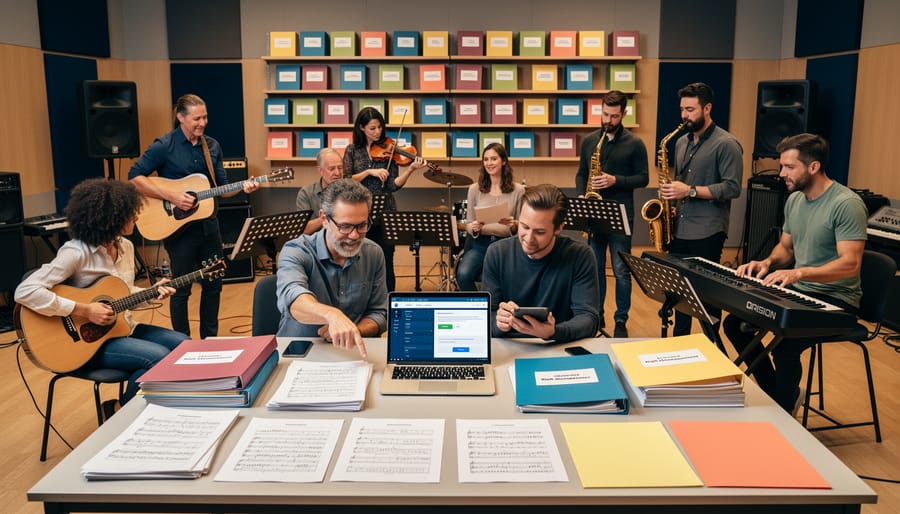
Transparency rights in reproduction and performing rights management aren’t reserved for a select few, they’re built to serve virtually all music creators, regardless of career stage or commercial success. If you create music, you likely qualify for these protections once you meet straightforward organizational and registration requirements.
The foundation of access starts with membership in a reproduction rights organization (such as CMRRA or SODRAC in Canada, or Harry Fox Agency in the U.S.) or a performing rights organization (SOCAN for Canadians, ASCAP/BMI/SESAC in the U.S., PRS for Music in the UK). These organizations don’t require you to have a record deal, publishing contract, or proven commercial track record. Songwriters, composers, lyricists, music publishers, and heirs managing estates all qualify for membership, provided they hold or administer rights to musical works.
Registration is typically free or involves minimal administrative fees, and the process establishes your legal right to transparency protections under each organization’s operating standards. Once registered, you gain access to royalty reporting systems, licensing databases, and dispute resolution mechanisms regardless of whether your music has generated substantial revenue yet.
The types of works covered under transparency rights include:
- Original compositions and songs, whether published or unpublished
- Co-written works where you hold a percentage of rights
- Derivative works, arrangements, and adaptations (with proper authorization)
- Instrumental compositions, lyrics-only works, and complete song packages
- Works registered in your home territory and those with cross-border exploitation
Canadian creators benefit from domestic transparency standards through SOCAN and reproduction rights organizations, but these protections extend internationally through reciprocal agreements. If you’re a SOCAN member and your music is performed in Germany, for example, GEMA (the German performing rights society) collects those royalties and reports them back through SOCAN’s systems, maintaining transparency across borders.
International creators working in Canada receive the same transparency protections as domestic members. An American songwriter with works licensed by Canadian broadcasters can access the same detailed reporting and data that Canadian creators receive, provided they’re registered with a recognized rights organization that has reciprocal agreements in place.
The eligibility threshold is deliberately low because transparency serves as a fundamental right for all creators, not a privilege for commercial successes. Even if your first song generates just a few dollars in royalties, you’re entitled to know exactly where that revenue came from, how it was calculated, and when you’ll receive payment.
How to Implement and Access Transparency Mechanisms

Requesting Detailed Royalty Breakdowns
When you need to see exactly how your royalties are calculated, start by logging into your reproduction or performing rights organization’s member portal. Most organizations, including SOCAN in Canada, ASCAP, BMI, and similar bodies internationally, offer a “Request Detailed Statement” or “Export Royalty Data” option under your account dashboard.
Submit your request by specifying the reporting period you want examined, the types of uses you’re questioning (mechanical reproductions, public performances, sync placements), and the works involved. Organizations typically respond within 15 to 30 business days with itemized breakdowns showing each usage instance, the venue or platform where it occurred, the number of plays or copies, the rate applied, and how they calculated your share after deductions.
If the standard report doesn’t answer your question, you can request a second-level review. Provide the statement reference number, identify specific line items that need clarification, and ask pointed questions: “How was the sample rate determined?” or “Why does this streaming payment differ from last quarter?” Most organizations assign a royalty specialist to walk you through complex calculations, especially for international distributions where multiple territories and exchange rates are involved.
Keep copies of all requests and responses, they’re essential if you later need to escalate or audit.
Accessing Licensing and Usage Data
Most reproduction and performing rights organizations now offer online portals where you can search their databases to see where your music is being licensed and performed. Log into your member dashboard and look for sections labeled “Usage Reports,” “Performance Data,” or “Licensing Activity.” These tools let you search by song title, catalog number, or date range to pull up specific performance records.
Start by checking your performing rights organization’s portal first. You’ll find broadcast logs showing which radio stations, streaming services, or venues played your work, along with performance dates and frequencies. For reproduction rights, look for licensing reports that show which companies have obtained mechanical licenses for your compositions. Some portals display this in real time, while others update monthly or quarterly.
Pay attention to filtering options. You can typically sort by territory (which countries your music was used in), media type (broadcast, digital, live performance), or licensee name. If you notice gaps or inconsistencies in the data, most portals include a “query” or “dispute” button right in the interface. Download your usage data regularly as CSV or PDF files for your own records, especially before tax season or when preparing audit documentation.
Your Rights and Obligations Under Transparency Standards

When you join a reproduction or performing rights organization, you enter a binding relationship that grants you specific transparency rights while requiring you to meet certain obligations. Understanding both sides ensures you receive fair compensation and maintain access to the protections these standards provide.
Your rights under transparency standards guarantee regular access to information about how your music is used and how your royalties are calculated. SOCAN members, for example, can request quarterly royalty statements that itemize every usage, from radio airplay to streaming placements. You’re entitled to see which specific works generated royalties, where they were performed or reproduced, and the precise calculation method applied. If your organization’s standard reporting lacks detail, you can request enhanced breakdowns within 30 days, and they must respond within a reasonable timeframe, typically 60 to 90 days depending on the complexity.
| Your Rights (What You’re Entitled To) | Your Obligations (What You Must Provide) |
|---|---|
| Quarterly royalty statements with usage details and payment calculations | Accurate metadata (song titles, writers, publishers, ISWC/ISRC codes) submitted within 30 days of release |
| Access to licensing databases showing who holds rights to use your works | Timely work registration with correct ownership splits and territory claims |
| 30-day response window for detailed reporting requests | Notification of metadata changes or ownership transfers within organizational deadlines |
| Audit rights to verify royalty calculations and distribution accuracy | Cooperation with dispute resolution procedures and provision of supporting documentation |
Audit rights represent one of your strongest transparency protections. Organizations must allow you to examine their books to verify that royalties were calculated correctly, though you typically bear the cost unless significant discrepancies are found. SOCAN audit rights permit members to request independent audits if they suspect errors, with findings that can trigger retroactive payments.
Your obligations mirror these rights. You must submit complete, accurate metadata when registering works, incomplete information means royalties can’t be matched to you. If you co-wrote a song, submit the exact ownership splits; if publishing rights changed hands, notify your organization immediately. Failure to maintain current information can result in delayed payments or forfeited royalties.
You’re also responsible for monitoring your statements and raising disputes promptly. Most organizations require written notice of discrepancies within 90 days of a statement’s issue date. Understanding how organizations help enforce these standards makes it easier to navigate the system when issues arise, but the initial responsibility to flag problems rests with you.
Where to Get Help and Official Resources
Canadian creators have multiple channels for support when navigating transparency systems in reproduction and performing rights. Moon Face provides dedicated creator support through its advocacy programs, educational resources, and direct assistance for rights-related questions. Contact Moon Face through its website portal for guidance on accessing transparency tools, understanding royalty reports, and resolving discrepancies in payment data.
For reproduction rights, SOCAN (Society of Composers, Authors and Music Publishers of Canada) operates a member services helpdesk at 1-866-307-6226, available Monday to Friday, 9 AM to 5 PM Eastern Time. SOCAN’s online member portal provides access to detailed reporting, licensing data, and registration support. International creators can contact their local performing rights organizations: ASCAP and BMI in the United States, PRS for Music in the UK, and APRA AMCOS in Australia all maintain dedicated transparency support teams.
Legal aid for rights disputes is available through the Canadian Music Publishers Association (CMPA) and Artists’ Legal Outreach, which provides free initial consultations for emerging artists. The Music Publishers Canada website maintains updated contact directories for rights organization representatives and dispute resolution services.
Emerging artists benefit from FACTOR’s educational programs on rights management, while established songwriters can access specialized support through the Songwriters Association of Canada. Estate administrators should contact the Canadian Musical Reproduction Rights Agency (CMRRA) directly for guidance on legacy rights transparency and reporting for deceased creators’ catalogues.
How to Apply or Complete the Process
Starting the transparency process requires action through your rights organization’s member portal. Most Canadian creators begin by logging into their SOCAN or CMRRA account, where you’ll find a dedicated transparency or reporting section in the main navigation.
Request your first detailed statement by selecting the reporting period you want to examine. Organizations typically offer quarterly or annual breakdowns, though many now provide real-time dashboards. Submit your request through the online form, specifying which rights you want tracked, mechanical, performance, or both.
Within your portal, update your metadata for all registered works. Complete fields include ISWC codes, alternate titles, co-writer percentages, and publisher information. Accurate data ensures your transparency reports match actual usage.
Activate notification preferences to receive alerts when new royalty statements post, when licensing activity occurs, or when usage patterns change. These automated updates keep you informed without requiring repeated manual checks.
If your organization offers open data API access, register for developer credentials to integrate transparency feeds into your own tracking systems. This option suits creators managing extensive catalogs or working with management teams.
For additional guidance on advocating for your rights and accessing comprehensive support, explore fair pay resources that connect Canadian musicians with transparency tools and rights education.
Common Questions About Transparency in Rights Management
Rights holders often have similar concerns when navigating transparency mechanisms. Here are answers to the most frequently asked questions about accessing and using these tools effectively.
How often can I request detailed royalty reports from my rights organization?
Most reproduction and performing rights organizations allow members to request detailed breakdowns quarterly, though some provide monthly access through digital portals. Your membership agreement specifies the exact frequency and whether there are limits on special report requests.
What should I do if I notice missing data or discrepancies in my royalty statements?
Contact your organization’s member services department immediately with specific details about the missing information, including dates, works affected, and any supporting documentation. Organizations must acknowledge your inquiry within a set timeframe, typically 10 to 15 business days, and provide a resolution pathway.
How can I verify that international royalty calculations are accurate?
Request a breakdown showing the foreign organization’s reported usage, the exchange rate applied, and any administrative fees deducted. Cross-reference this against your work’s registration in international databases and consider comparing rates with fellow creators who’ve received payments from the same territory.
What recourse do I have if my rights organization violates transparency standards?
Start with the organization’s formal complaint process, escalate to their oversight board if unresolved, and consider contacting regulatory bodies or creator advocacy groups who can intervene on your behalf. Document all communications and discrepancies to support your case.
The key to resolving transparency issues is acting promptly and maintaining thorough records. Most organizations have internal dispute resolution processes designed to address member concerns before they escalate. Keep copies of all correspondence, save screenshots of portal data, and note the dates when you requested information or flagged problems.
If you’re uncertain whether a discrepancy warrants formal action, consult with fellow creators or reach out to advocacy groups who can help you assess the situation. Sometimes what appears to be missing data is actually a timing issue with international reporting cycles, but persistent gaps deserve investigation. Don’t hesitate to ask questions, transparency mechanisms exist precisely so you can verify that you’re receiving everything you’ve earned.
The five transparency principles represent a fundamental shift in how Canadian musicians and songwriters can monitor and control their rights. Clear royalty reporting, accessible licensing information, open data sharing, timely payment communication, and transparent dispute resolution aren’t just administrative improvements, they’re tools that put you in the driver’s seat of your own career. By actively requesting detailed breakdowns, tracking your work’s usage through organizational portals, and holding rights organizations accountable to these standards, you ensure that your creative contributions translate into fair compensation.
Transparency standards continue to evolve as technology and advocacy push the industry forward. What feels comprehensive today will likely expand tomorrow, with improved data granularity, faster reporting cycles, and more robust audit mechanisms. The creators who stay informed about their rights, ask questions when data doesn’t add up, and connect with support resources when needed are the ones who benefit most from these protections. Your voice matters in this transformation, both in claiming what you’re owed and in demanding that transparency becomes the universal standard across all reproduction and performing rights organizations.