
Musician wellness means protecting your physical health, mental resilience, and financial stability while building a sustainable career in an industry that demands irregular hours, constant travel, and emotional vulnerability. The unique demands of performing, recording, and promoting music create specific health risks that generic wellness advice rarely addresses: repetitive strain injuries from practice, hearing damage from prolonged sound exposure, anxiety from income volatility, and burnout from the pressure to maintain both artistic authenticity and commercial viability. The solution requires a tailored approach that acknowledges these realities while providing practical strategies you can implement despite unpredictable schedules and limited budgets.
Musicians face wellness challenges that compound over time. A guitarist who ignores early signs of tendonitis may find themselves unable to play within months. A vocalist who doesn’t prioritize sleep and hydration before performances risks permanent damage to their instrument. Mental health struggles often intensify in isolation during touring or in the feast-or-famine cycles of project-based work. In Canada, where geographic distances can separate musicians from support networks and healthcare access varies by province, these challenges become even more pronounced for artists working outside major urban centers.
The good news is that musician wellness isn’t about overhauling your entire life or investing in expensive programs. Small, consistent changes in how you approach practice routines, performance preparation, income management, and recovery time create compounding benefits. Understanding the interconnected nature of physical strain, mental health, and financial stress allows you to address root causes rather than symptoms. This article provides evidence-based strategies designed specifically for the realities of music careers in 2026, recognizing that sustainable artistry depends on sustainable health practices.
The Real Cost of Neglecting Your Health as a Musician
When you cancel a gig because your wrist pain has become unbearable, you’re not just losing that night’s income. You’re facing a cascade of consequences that compound over time, delayed rent, missed networking opportunities, and the erosion of your professional reputation. For musicians, health isn’t separate from career; it’s the foundation upon which everything else stands.
The physical toll of ignoring wellness warnings shows up first in small ways. That slight tingling in your fingers after a four-hour recording session becomes carpal tunnel syndrome that sidelines you for months. The hoarseness you push through during a weekend of back-to-back shows develops into vocal nodules requiring surgery and lengthy recovery. Guitarists develop tendinitis, drummers suffer hearing loss, and vocalists strain their instruments beyond repair, all because the immediate demands of gigging felt more urgent than rest and prevention.
Mental health consequences prove equally devastating but often remain invisible until they’ve reached crisis levels. Performance anxiety that goes unaddressed escalates into full-blown panic attacks that make stepping on stage impossible. The constant rejection inherent to the industry, auditions lost, grants denied, gigs cancelled, grinds down resilience without adequate emotional support systems. Burnout doesn’t announce itself with fanfare; it creeps in through exhaustion, creative emptiness, and the hollow feeling that the music you once loved has become just another source of stress.
Financial instability magnifies every health challenge. In Canada, while basic healthcare is publicly funded, many services musicians need most, physiotherapy for repetitive strain injuries, mental health counselling, custom hearing protection, vocal coaching for injury recovery, require out-of-pocket payment or extended health insurance that irregular income makes difficult to maintain. When you’re choosing between fixing your guitar and seeing a therapist, or between paying rent and getting that wrist examined, wellness loses.
The compounding effect is what ultimately derails careers. A minor injury ignored becomes chronic. Stress without management becomes depression. Unstable income without planning becomes crisis. Each neglected dimension of wellness doesn’t stay contained, it bleeds into the others, creating a downward spiral that can end careers that talent alone should have sustained for decades.
Physical Wellness: Protecting Your Instrument, Your Body
Injury Prevention and Management
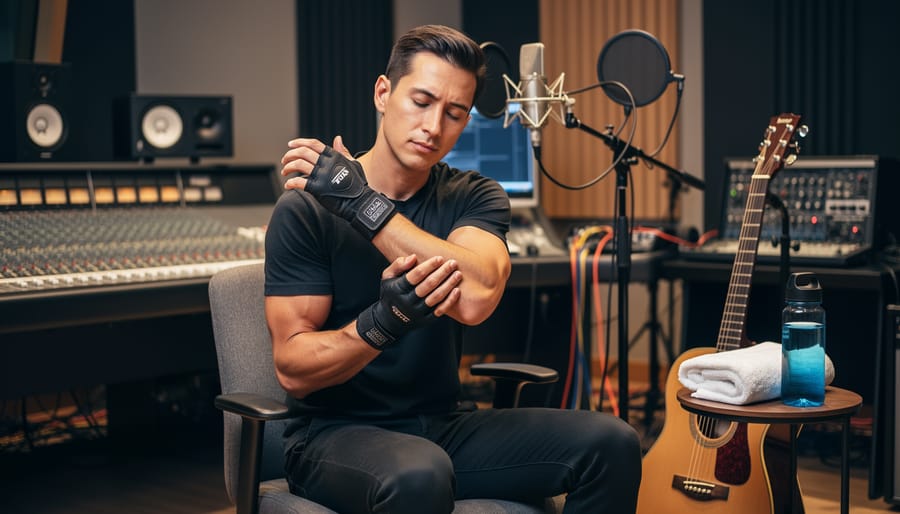
Musicians face unique repetitive strain injuries that can end careers if ignored. Understanding prevention starts with recognizing that your body performs athletic-level movements during practice and performance, sometimes for hours at a time.
Tendinitis, carpal tunnel syndrome, and back problems typically develop gradually through poor posture, inadequate warm-ups, or pushing through pain. Guitarists and bassists frequently experience left-hand tendinitis and wrist problems. Pianists develop carpal tunnel from repetitive flexion. String players strain their necks and shoulders. Drummers face whole-body stress, particularly in the wrists, shoulders, and lower back.
Prevention requires treating practice like athletic training. Start every session with five to ten minutes of gentle stretching targeting your specific movements, wrist circles, shoulder rolls, neck tilts, and finger extensions. Gradually increase intensity rather than diving into difficult passages cold.
Technique matters more than hours logged. Work with a qualified teacher to identify tension patterns and postural issues before they become chronic problems. Video yourself playing to spot hunched shoulders, locked elbows, or twisted wrists you might not feel in the moment.
Take regular breaks during practice sessions, at minimum, five minutes every thirty minutes. This prevents the cumulative micro-trauma that leads to overuse injuries.
Seek professional help at the first sign of persistent pain, numbness, or weakness. Physiotherapists experienced with musicians can address problems early, while waiting often means longer recovery times and potential permanent damage. In Canada, many provinces cover physiotherapy through extended health benefits or workers’ compensation for professional musicians.
Hearing Health and Protection

Your hearing is your career. Once damaged, it doesn’t heal, noise-induced hearing loss is permanent, and every loud rehearsal, gig, or production session adds up. Many musicians don’t realize the harm until tinnitus sets in or frequencies start disappearing, but by then the irreversible noise damage has already occurred.
Custom musician earplugs are non-negotiable for anyone regularly exposed to high volumes. Unlike foam plugs that muffle sound, custom-molded filters reduce decibel levels evenly across frequencies, preserving sound quality while protecting your ears. They cost between $150 and $300 in Canada, a small investment compared to a lifetime of hearing loss. Use them during rehearsals, performances, and even when monitoring in the studio.
Monitor your exposure: sustained levels above 85 dB cause damage, and most live shows easily hit 100 dB or higher. If your ears ring after a gig, you’ve already overexposed them. Schedule annual hearing tests with an audiologist who understands musicians’ needs, early detection of threshold shifts lets you adjust before permanent damage worsens. Protect what you can’t replace.
Mental Health and Emotional Resilience in the Music Industry

Managing Performance Anxiety and Creative Blocks
Performance anxiety affects musicians at every career stage, from first open mics to stadium tours. The physical symptoms, racing heart, shaky hands, shallow breathing, can derail even well-rehearsed performances. Start with grounding techniques before stepping onstage: diaphragm breathing helps anxiety by activating your parasympathetic nervous system, slowing your heart rate and clearing mental fog. Practice 4-7-8 breathing (inhale for four counts, hold for seven, exhale for eight) during rehearsals so it becomes automatic when nerves strike.
Cognitive reframing shifts how you interpret anxiety. Instead of “I’m terrified and going to mess up,” try “My body is energized and ready to perform.” This small language shift acknowledges the physical sensations without catastrophizing them. Visualize successful performances in detail, engaging all your senses, to build mental pathways that reduce fear of the unknown.
For creative blocks, change your environment or medium entirely. If songwriting feels stuck, improvise on an unfamiliar instrument. Incorporate meditation music into your warm-up routine or use deep sleep music for better rest when performance pressure disrupts sleep. When self-help techniques aren’t enough, therapists specializing in performance psychology or cognitive behavioral therapy can provide targeted strategies. Many offer sliding-scale fees or virtual sessions that fit touring schedules.
Building Community and Avoiding Isolation
The independent music career can feel profoundly isolating. You’re managing business decisions alone, creating in solitary practice spaces, and navigating an industry that often feels indifferent to individual struggles. This isolation compounds mental health challenges and makes wellness feel unattainable.
Building genuine connections with other musicians transforms this reality. Peer relationships provide practical support, someone who understands why a cancelled gig devastates your monthly budget or how rejection from a festival submission feels. These connections aren’t networking in the transactional sense; they’re relationships with people who get it.
Canadian organizations like the Canadian Independent Music Association and regional music industry associations offer structured communities where musicians share resources, experiences, and opportunities. Online communities and local songwriter circles create spaces for collaboration and mutual support without geographic barriers.
Mentorship matters deeply for wellness. Learning from someone who’s navigated the same pressures you face provides both practical guidance and emotional reassurance that sustainable music careers are possible. Don’t wait for formal mentorship programs, reach out to artists whose careers you respect.
Connection combats the shame that isolation breeds. When you’re struggling financially or creatively, knowing others face similar challenges reduces the internal narrative that you’re failing. Community reminds you that the challenges are systemic, not personal failures.
Financial Wellness: The Foundation of Sustainable Music Careers
Ensuring You’re Paid What You’re Owed
Getting paid properly isn’t just about money, it’s about sustaining your health and capacity to create. When your work generates revenue you never collect, you’re essentially subsidizing others while jeopardizing your own wellness.
Start by ensuring you’re registered with the rights organizations that collect on your behalf. In Canada, SOCAN collects performance royalties when your music plays publicly, while reproduction rights organizations handle mechanical royalties from physical and digital reproductions. Many musicians leave thousands in uncollected royalties simply because they haven’t completed basic registrations.
Moon Face specializes in helping Canadian artists navigate global licensing, ensuring your music generates income worldwide rather than just domestically. When your songs stream in Germany or get licensed for a commercial in Japan, proper registration means you actually receive those royalties.
Understanding the difference between reproduction and performing rights prevents you from missing entire revenue streams. Your composition earns both when it’s reproduced (streamed, downloaded, pressed) and performed (radio, live venues, background music). Each requires separate registration.
If this feels overwhelming, you’re not alone. Resources exist showing where to get help navigating registration, understanding your rights, and maximizing what you collect. Investing time in proper setup protects your financial wellness for the duration of your career.
Creating Your Personal Wellness Plan as a Working Musician
A sustainable wellness plan isn’t about perfection, it’s about creating realistic habits that fit your actual life as a musician. Here’s how to build one that works with your schedule, not against it.
- Assess your current reality. Track a typical week: when you rehearse, perform, teach, or hustle for gigs. Note when you feel energized versus depleted, and identify which wellness areas you’re already neglecting.
- Set non-negotiable boundaries. Choose one physical, one mental, and one financial wellness practice you’ll protect no matter what, maybe warming up before every rehearsal, blocking Sunday afternoons for rest, or reviewing royalty statements quarterly.
- Schedule self-care like you schedule gigs. Put it in your calendar. A 20-minute walk, therapy appointments, meal prep sessions, if it’s not scheduled, it won’t happen when you’re juggling session work and late-night performances.
- Build your support network. Identify one person who understands musician life, a peer, mentor, or accountability partner, who’ll check in when you’re overwhelmed. Connect with fair compensation groups that advocate for your financial stability alongside your creative success.
- Create touring and irregular-income adaptations. Pack resistance bands for hotel workouts, download meditation apps for backstage anxiety, and maintain a financial buffer equal to three months of basic expenses for slow periods.
Your plan needs flexibility. When you’re on a two-week tour, your routine will look different than during a month of local teaching. That’s fine. The goal is maintaining some wellness practice rather than abandoning everything because circumstances changed.
Review your plan quarterly. What’s working? What fell apart immediately? Adjust based on your real patterns, not what you think you should be doing. A 10-minute daily stretching routine you actually do beats an hour-long gym plan you never start.
Remember that wellness directly impacts your earning potential. You can’t perform, teach, or create when you’re injured, burned out, or financially desperate. Protecting your health protects your career.
Resources and Support for Canadian Musicians
Accessing the right support can make the difference between thriving and struggling in your music career. Canadian musicians have access to specialized resources designed to address the unique wellness challenges of creative professionals.
Professional and Health Organizations
The Musician’s Clinics of Canada provides specialized medical care for performance-related injuries and conditions across multiple locations. Their practitioners understand the specific demands musicians face and offer tailored treatment approaches. For mental health support, the Unison Benevolent Fund assists music professionals experiencing crisis situations, offering both financial aid and connections to counseling services.
Financial and Legal Support
Organizations like Music Publishers Canada and SOCAN provide educational resources about rights management and royalty collection, essential knowledge for financial wellness. The Canadian Independent Music Association offers workshops on business planning and sustainable career development. Moon Face specializes in ensuring musicians receive proper compensation through licensing and royalty distribution, both domestically and internationally, addressing a critical component of financial stability.
Mental Health Resources
The Centre for Addiction and Mental Health offers programs specifically addressing performance anxiety and creative burnout. Many provincial arts councils provide emergency funding for artists facing health crises that interrupt their ability to work.
International Networks
Beyond Canadian borders, organizations like the Music Health Alliance and Performing Arts Medicine Association connect musicians with specialized care providers worldwide. These networks prove invaluable during touring or when seeking expertise in specific performance-related conditions.
Connecting with these resources early, before crisis hits, strengthens your support system and reinforces your long-term wellness foundation.
Your music deserves a healthy creator behind it. Not someday, when things slow down or your career takes off, right now, in the middle of your current reality.
Musician wellness isn’t about achieving perfect balance or waiting for the ideal conditions. It’s about making deliberate choices that protect your ability to create tomorrow. Every warm-up routine before you play, every boundary you set with late-night gigs, every time you check whether you’re registered to collect the royalties you’ve earned, these aren’t distractions from your music. They’re what makes sustained music possible.
The Canadian music landscape, like the global industry, needs artists who can contribute over decades, not just burn bright for a few years before exhaustion or injury forces them out. Your physical stamina, mental resilience, and financial stability aren’t separate from your artistry. They’re the foundation it stands on.
Start somewhere. Pick one area, hearing protection, a monthly budget review, a therapist who understands performance anxiety, and build from there. Connect with organizations that fight for fair compensation and proper licensing, because your financial wellness depends on systems working correctly, not just your hustle.
Protecting your health as a musician isn’t selfish. It’s how you keep contributing the music only you can make.