
Sleep music and nature sounds represent one of streaming’s fastest-growing commercial opportunities for Canadian creators, with wellness audio commanding millions of daily streams and offering unique licensing pathways that differ significantly from traditional music rights management. Unlike conventional songwriting, this genre functions as both background content and therapeutic audio, creating distinct revenue streams through streaming platforms, meditation apps, healthcare providers, and direct-to-consumer channels. The rights landscape is equally distinct: tracks often require mechanical licenses, sync rights for video content, and specialized wellness platform agreements that many performing rights organizations are still refining.
For musicians exploring this market, the opportunity extends beyond passive streaming income. Sleep and nature audio integrates with meditation music for sleep platforms, corporate wellness programs, and international licensing deals that value consistency and catalog depth over viral hits. Canadian creators benefit from SOCAN’s evolving frameworks for ambient and wellness audio, though navigating international collection societies requires careful attention to how different territories classify and compensate non-lyrical, extended-duration works.
This article addresses the commercial realities of creating sleep music: how to structure compositions for algorithmic discovery, which rights to retain for maximum licensing flexibility, and where Canadian artists can access fair compensation in a market that has historically undervalued background audio. The wellness audio sector is projected to grow substantially, and understanding its distinct business model positions you to build sustainable income while contributing to listeners’ well-being.
What Makes Sleep Music and Nature Sounds Effective
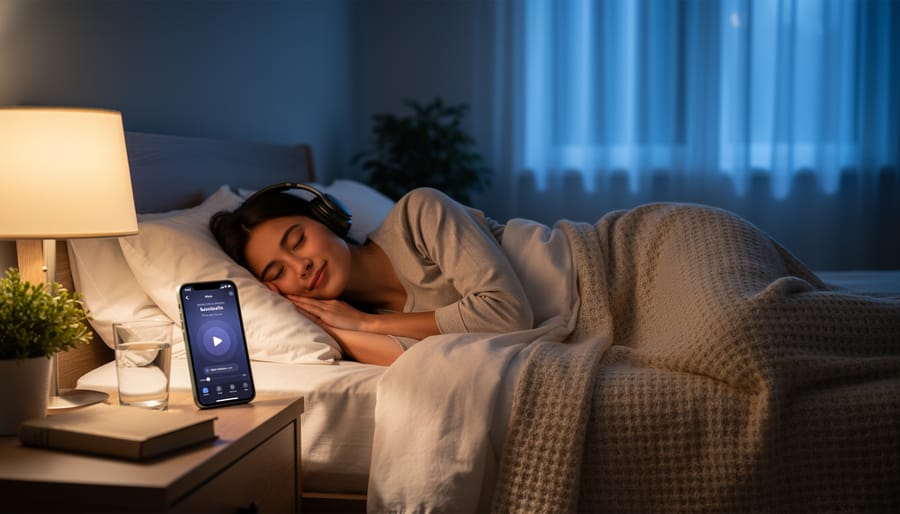
Sleep music functions through deliberate acoustic design rather than happy accident. Composers working in this genre carefully control tempo, typically keeping tracks between 60 and 80 beats per minute to mirror resting heart rates and encourage physiological relaxation. This isn’t background music stripped of intention, it’s purposeful construction where every element serves the goal of reducing cognitive arousal without triggering alertness.
Frequency selection matters as much as rhythm. Effective sleep compositions avoid sharp treble peaks and jarring bass drops, instead favoring midrange frequencies that the brain processes with minimal effort. Many Canadian sound designers incorporate binaural beat techniques subtle frequency differences between left and right channels that research suggests may promote specific brainwave states associated with relaxation and sleep onset.
The absence of sudden changes distinguishes professional sleep audio from generic ambient music. Volume swells, key changes, unexpected instrumental entries, these compositional tools that create interest in conventional music work against sleep induction. Composers instead sustain consistent sonic environments, using gradual transitions measured in minutes rather than bars. It’s restraint as artistry.
Nature sounds serve multiple functions beyond simple ambiance. Rain patterns, ocean waves, and forest atmospheres provide pink noise characteristics that mask disruptive environmental sounds while offering organic irregularity that prevents the monotony fatigue associated with pure synthetic tones. When integrated with musical elements, these recordings create layered soundscapes where the interplay between natural and composed elements requires sophisticated mixing and spatial awareness. The seeming simplicity of a sleep track often conceals hours of careful editing to remove jarring birdsong peaks or wind gusts that might trigger arousal, demonstrating the technical skill this genre demands from its creators.
The Growing Market for Sleep and Wellness Audio

The wellness audio sector has evolved into a substantial commercial market, driven by mounting awareness of sleep disorders and mental health needs across developed economies. In 2026, sleep music and nature sounds represent a multi-million-dollar segment within digital audio, with demand spanning consumer apps, clinical environments, and hospitality services. For Canadian composers and sound designers, this growth translates into tangible revenue streams that extend far beyond traditional music licensing.
Streaming platforms have become primary distribution channels for sleep content, with dedicated wellness categories on Spotify, Apple Music, and YouTube Music attracting billions of collective plays annually. Unlike mainstream music, sleep tracks often accumulate streams through extended playback, a single eight-hour composition can generate multiple royalty events per user session. Meditation apps such as Calm, Headspace, and Insight Timer license curated libraries from independent creators, typically through upfront fees plus performance royalties as usage scales.
The commercial landscape for sleep and wellness audio includes:
- Streaming services with dedicated sleep and meditation playlists
- Subscription meditation apps requiring licensed background audio
- Standalone sleep apps featuring customizable soundscapes
- White noise machines and smart home devices with embedded content
- Healthcare facilities using therapeutic audio in patient care
- Hotels, spas, and wellness centers licensing ambient programming
- YouTube wellness channels monetizing long-form sleep videos
Canadian creators benefit from reciprocal agreements between SOCAN and international rights organizations, ensuring royalty collection when their tracks stream in the United States, Europe, and Asia-Pacific markets. Digital distribution has eliminated traditional geographic barriers, an artist in Vancouver can license work to a meditation app based in London while collecting performing rights from streams in Tokyo.
Revenue models vary by platform. Some wellness apps offer blanket licensing arrangements with guaranteed minimums; others operate on revenue-share models tied to subscriber counts. YouTube’s Content ID system allows creators to monetize user-generated wellness channels that incorporate their work, though enforcement requires proactive registration. White noise device manufacturers typically negotiate one-time synchronization fees for embedded content, while healthcare and hospitality sectors often secure public performance licenses through their existing SOCAN agreements, generating ongoing royalties for registered composers.
Rights Management for Sleep Music and Nature Sounds
Reproduction and Mechanical Rights
When you distribute sleep music through Spotify, Apple Music, YouTube Music, wellness apps, or direct downloads, you’re exercising reproduction rights, the legal permission to reproduce and distribute your composition and sound recording. Each stream or download triggers a mechanical royalty owed to you as the songwriter and composer.
In Canada, CMRRA (Canadian Musical Reproduction Rights Agency) and SODRAC administer mechanical rights for many composers, collecting royalties from digital service providers and distributors. If you release sleep music independently through aggregators like DistroKid or CD Baby, these platforms typically handle mechanical licensing on your behalf, but you still need to register your compositions with a rights organization to ensure you’re paid.
For sleep music specifically, long-duration tracks (30 minutes, 60 minutes, or longer) count as single works for mechanical royalty purposes, even though listeners may stream them repeatedly throughout the night. This makes proper registration critical, each play generates revenue, and the cumulative royalties from wellness playlists and sleep apps can be substantial.
The challenge lies in ensuring transparency in rights administration across international platforms. Canadian creators should verify that their mechanical rights are registered both domestically and in key markets where their sleep music reaches listeners, particularly the United States, United Kingdom, and European Union, where wellness audio consumption is highest.
Performing Rights and Public Performance
Performing rights generate royalties whenever your sleep music plays in a public setting, and “public” covers more than you might expect. A yoga studio streaming your track during a class triggers performing rights. So does a hospital playing your nature soundscape in a recovery ward, a hotel using your composition in its spa, or a meditation app delivering your work to thousands of users simultaneously. Even background music in a waiting room counts.
The key distinction: performing rights compensate you for the use of your composition in a public context, while reproduction & performing rights together cover the full spectrum of how your work generates income. If someone can hear your music outside a private home setting, performing rights likely apply.
Many wellness businesses don’t realize they need blanket licenses from performing rights organizations to legally use sleep music. That’s why registering your compositions with a PRO matters: the organization monitors public performance, collects fees from licensed venues and platforms, and distributes royalties to you. Without registration, you forfeit that income entirely.
For Canadian creators, SOCAN handles performing rights domestically and maintains reciprocal agreements with international PROs. Register every sleep track you release, even brief nature loops. A three-minute soundscape played on repeat in a chain of meditation studios can generate meaningful royalties over time, but only if the PRO knows the work exists and can attribute performances to you.
Creating and Protecting Original Nature Sound Recordings
Recording original nature sounds gives Canadian musicians a distinct creative and commercial advantage. While stock libraries offer convenience, field recordings carry unique sonic characteristics, the resonance of a specific forest, the rhythm of a particular shoreline, that cannot be replicated. These original recordings also position creators as rights holders of both the environmental audio and any musical elements they layer on top, strengthening their licensing power and revenue potential.
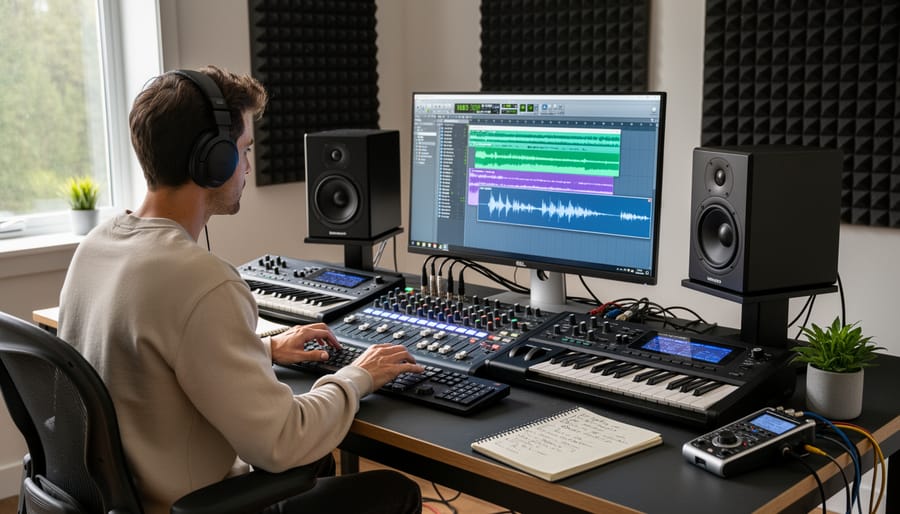
Field recording requires technical skill and planning. Quality captures depend on microphone placement, wind protection, and timing: dawn recordings often feature different species and ambience than midday or dusk sessions. Many Canadian sleep music producers record in remote locations across provinces, boreal forests, coastal tidal zones, prairie grasslands, to capture distinct regional soundscapes. The investment in portable recording equipment and site access pays off through exclusive audio assets that streaming platforms and wellness apps value for their authenticity.
Copyright ownership of environmental recordings belongs to the person who made the recording, not to nature itself. This means a Canadian composer who records rainfall in Algonquin Park owns that specific audio file, its timing, mic positioning, post-processing, even though rain is a natural phenomenon. When these sounds are combined with musical elements like sustained synthesizer pads, gentle piano, or string arrangements, the result is a derivative work where the creator holds rights to both components.
Protecting these works internationally starts with proper metadata. Embedding creator information, copyright dates, and PRO affiliation directly into audio files helps rights organizations track usage across borders. Registering compositions that blend field recordings with music ensures that both elements are covered under mechanical and performing rights agreements. For Canadian creators distributing through global wellness platforms or meditation apps, this documentation becomes essential when royalties flow from multiple territories.
Original nature sound recordings also open collaboration opportunities. Licensing these assets to other composers, sound designers, or app developers creates additional revenue streams beyond direct use in sleep music tracks. The exclusivity and regional character of Canadian environmental recordings, loon calls, northern auroral crackle, coastal fog ambience, hold particular appeal in international markets where these sounds are rare or unavailable.
Collaboration Opportunities and International Connections
Canadian sleep music creators have unprecedented access to international markets in 2026, but success beyond domestic borders requires strategic partnerships and proper rights infrastructure. Global wellness platforms, including meditation apps with millions of users across Europe, Asia, and South America, actively seek licensed content from diverse creators, offering Canadian composers opportunities to reach audiences they couldn’t access independently.
International collaborations often begin through reciprocal licensing agreements between rights organizations in different countries. When a Canadian composer’s sleep music is streamed in Japan, Germany, or Australia, these agreements ensure that performing rights societies in those territories collect royalties and transfer them back to Canada. The efficiency of this system depends on creators registering their works properly with Canadian organizations that maintain relationships with counterparts worldwide. Without these connections, cross-border royalties can go uncollected, a significant loss given that wellness audio consumption increasingly occurs across multiple countries simultaneously.
Direct partnerships with international wellness platforms require clear licensing terms. Many platforms operate under blanket licenses negotiated with rights societies, but some approach creators directly for exclusive content or curated collections. Canadian musicians entering these arrangements should verify that contracts specify territory coverage, duration, revenue splits, and whether the platform will handle mechanical and performing rights reporting in each jurisdiction. Working with fair compensation organizations experienced in international licensing helps creators navigate these negotiations and avoid agreements that undervalue their work or create administrative complications.
Collaborative projects with international sound designers, meditation teachers, or wellness brands can expand a creator’s portfolio while sharing production costs and marketing reach. These partnerships work best when rights ownership, revenue distribution, and territorial responsibilities are documented upfront, preventing disputes when tracks generate income across multiple countries years after initial release.
Common Questions About Sleep Music Rights and Compensation
Canadian musicians creating sleep and wellness audio often encounter questions about how rights and royalties work in this specialized market. Understanding the practical details helps creators protect their work and maximize revenue from platforms that serve listeners seeking better sleep for creators and wellness consumers worldwide.
How are royalties calculated for long-duration sleep tracks?
Royalties for extended tracks are typically calculated based on the number of streams or downloads, not track length. Most streaming platforms pay per play once a minimum threshold is met, usually 30 seconds, meaning a 10-hour sleep track earns the same per-stream rate as a 3-minute song.
Does looping my music affect my compensation?
Looping within a single registered track does not reduce your royalties, but uploading the same composition multiple times under different titles can complicate rights tracking and may violate platform terms. Register each unique composition once and let the platform handle playback repetition.
How do I license my music for meditation apps?
Meditation apps typically require synchronization licenses and may negotiate either per-use fees, revenue shares, or flat licensing agreements. Work with your rights organization or a music lawyer to ensure contracts cover all uses, including offline downloads and international distribution.
What rights apply to my nature sound compilations?
If you recorded the original nature sounds, you own both the composition and the sound recording rights. Compilations combining your field recordings with musical elements qualify for full copyright protection, while using stock library sounds may limit your ownership to the arrangement only.
International streaming platforms report sleep music usage through digital service provider statements, which your performing rights organization uses to calculate and distribute royalties. Keep detailed records of your registered works, including alternate titles and collaborators, to ensure accurate payment tracking across global markets.
The sleep and wellness audio market represents a significant opportunity for Canadian musicians and composers, but only when creators understand and protect their rights. As this sector continues to grow in 2026, proper registration with rights organizations becomes essential, not just recommended. Every sleep track, nature soundscape, and ambient composition deserves the same rights protection as any other musical work.
Musicians entering this space should register their compositions with their performing rights organization and ensure mechanical rights are properly tracked through their distributor or licensing partners. The international reach of wellness apps and streaming platforms means your work can generate royalties from multiple territories, but only if you’ve established the necessary frameworks.
The therapeutic audio industry has matured beyond background noise into a legitimate creative field where artistry, science, and commerce intersect. Canadian creators bring unique perspectives to this global market, and organizations exist specifically to ensure you receive fair compensation for your contributions. Whether you’re composing your first sleep track or building a catalog of wellness audio, understanding the rights landscape protects your work and supports the broader ecosystem of music creators worldwide.