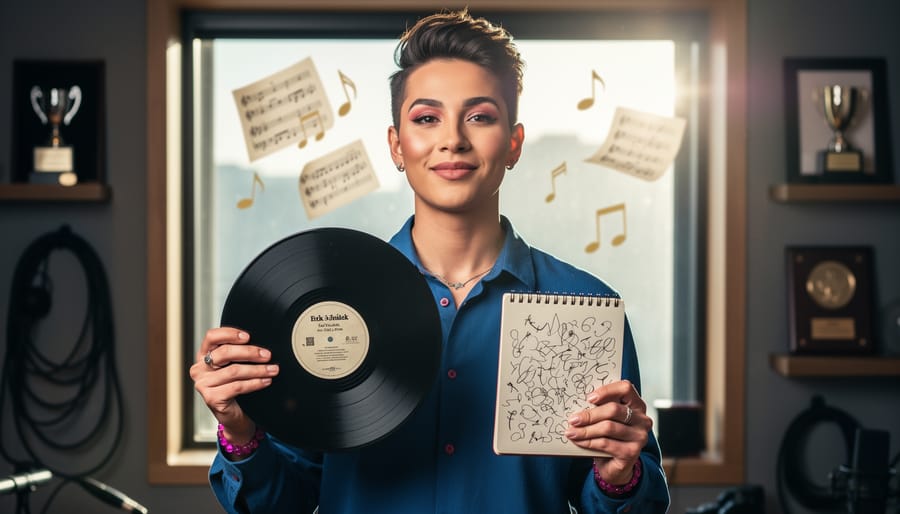
Queering reproductive justice means expanding the framework of reproductive rights and bodily autonomy to centre LGBTQ2S+ experiences, recognizing that control over creative output, artistic identity, and cultural legacy are reproductive acts for musicians whose work lives beyond them. In the music industry, this intersectional approach challenges whose stories get told, whose artistic lineage gets protected, and who holds power over the creative decisions that shape an artist’s body of work and public legacy.
For too long, music rights frameworks have operated as though all creators share identical relationships to their work…