
Queering reproductive justice means expanding the framework of reproductive rights and bodily autonomy to centre LGBTQ2S+ experiences, recognizing that control over creative output, artistic identity, and cultural legacy are reproductive acts for musicians whose work lives beyond them. In the music industry, this intersectional approach challenges whose stories get told, whose artistic lineage gets protected, and who holds power over the creative decisions that shape an artist’s body of work and public legacy.
For too long, music rights frameworks have operated as though all creators share identical relationships to their work, their names, and their futures. They haven’t. Trans and non-binary artists navigating deadnaming in catalogue credits, same-sex partners excluded from succession rights, and queer collectives creating outside traditional authorship structures face barriers that standard rights management wasn’t designed to address. Reproductive justice, born from Black feminist organizing, insists that people have the right not only to create or not create, but to parent and sustain their creations in safe, supported conditions. Applied to music, this means artists control not just whether they release work, but how it’s attributed, who benefits from it after their death, and whether their artistic identity remains intact across their career.
This article breaks down what queering reproductive justice means in practical terms for Canadian and international music professionals. You’ll learn how this framework transforms rights management, the specific areas where queer and trans creators face systemic gaps, and the emerging practices that forward-thinking organizations are implementing in 2026. Whether you’re updating your estate planning, negotiating catalogue deals, or building more inclusive industry structures, understanding this intersection offers both a moral compass and a strategic advantage in protecting the full spectrum of creative autonomy.
What Queering Reproductive Justice Means in Music
The Reproductive Justice Framework
Reproductive justice emerged in 1994 when Black women organizing for abortion rights recognized that access alone wasn’t enough. Sister Song defines reproductive justice through three interconnected principles: the right to have children, the right not to have children, and the right to parent in safe, sustainable communities. This framework, rooted in Black feminist thought, challenges single-issue advocacy by addressing how racism, economic injustice, and systemic oppression shape reproductive decisions.
When we apply this to music, “reproduction” takes on dual meaning. It encompasses both biological reproduction (artists’ lives as parents, caregivers, or chosen family members) and the reproduction of creative work, every recording, performance, cover version, and licensed use. Just as reproductive justice asks who controls your body and family choices, queering reproductive justice asks who controls your songs, how they’re reproduced and performed, and whether compensation systems respect the full complexity of queer artists’ lives. The framework insists that creative autonomy and fair payment aren’t separate from identity, they’re inseparable from survival and self-determination.
Queering as Creative Disruption
LGBTQ2S+ artists have historically faced barriers in music systems designed around heteronormative family structures and cisgender identities. Queering these systems means questioning who gets to decide what music is reproduced, how it’s licensed, and who receives compensation.
Traditional gatekeeping in music reproduction often assumes a single copyright holder with a spouse and biological children as beneficiaries. This framework excludes chosen families, polyamorous partnerships, and collective ownership models common in queer creative communities. When licensing agreements require “legal spouse” designations or inheritance structures tied to blood relations, they deny many LGBTQ2S+ artists the ability to direct their work’s future according to their actual relationships and values.
Performance compensation systems similarly reflect heteronormative assumptions. Venues may undervalue Pride performances or niche LGBTQ2S+ events while paying higher rates for mainstream bookings. Digital platforms sometimes categorize queer content as “adult” or “sensitive,” limiting visibility and reducing streaming revenue compared to equivalent heterosexual content.
Disrupting these patterns requires redesigning registration forms, expanding beneficiary options, and examining how cultural bias affects compensation rates. It means recognizing that reproductive justice in music extends beyond legal compliance to genuine inclusion in how creative work is controlled, shared, and valued.
How Queering Reproductive Justice Works in Practice
Transforming Registration and Recognition
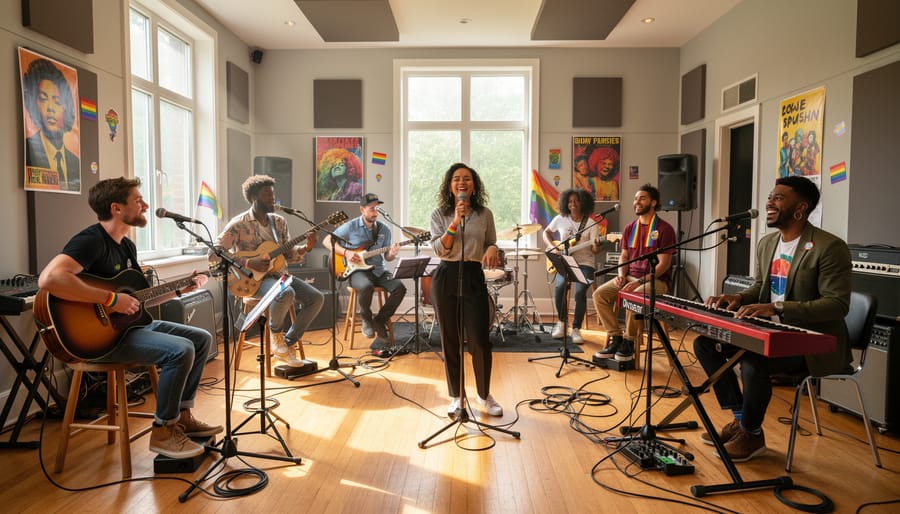
Most music rights organizations still ask members to check “male” or “female” on registration forms, list a single legal name, and designate one spouse as a beneficiary. These legacy systems erase non-binary artists, force trans musicians to use deadnames in royalty databases, and ignore polyamorous families or creative collectives who share rights. Queering reproductive justice demands structural change: add gender-neutral options and free-text fields for pronouns, allow artists to register chosen names alongside legal identifiers for payment processing, and create flexible beneficiary designations that recognize multiple partners, chosen family, or collective ownership models. Update metadata standards so streaming platforms and licensing databases can reflect an artist’s current identity rather than locking them into outdated records. Train registration staff to ask “What name do you want on your royalty statements?” instead of defaulting to birth certificates. These shifts aren’t cosmetic, they determine whether queer artists can access eligibility and help without outing themselves or erasing their identities. Canadian organizations like SOCAN and CMRRA can lead by auditing every member-facing system for cisnormative assumptions, then rebuilding registration to centre self-determination.
Rethinking Compensation Models
Traditional royalty distribution systems assume heterosexual marriages, nuclear families, and single-author ownership, structures that often exclude LGBTQ2S+ realities. A songwriter in a polyamorous triad can’t designate three beneficiaries under most standard contracts. A non-binary artist’s chosen family may have no legal standing when estates distribute performance royalties. Trans creators who’ve changed their legal names face metadata mismatches that delay or redirect payments meant for them.
Flexible beneficiary designations solve this. Instead of rigid “spouse” fields, rights organizations can allow creators to name any individuals or collectives as recipients, with customizable percentage splits. This respects queer kinship networks, creative partnerships, and community care structures without forcing artists into normative boxes.
Implementing these changes requires updating database schemas and contract templates, but the infrastructure already exists, it’s a policy choice, not a technical barrier. Pairing flexible designations with transparency principles ensures creators can verify their chosen beneficiaries receive compensation as intended, closing gaps that have historically diverted royalties from LGBTQ2S+ artists and their communities.
Creating Safe Performance Spaces
Performing rights extend beyond royalty collection, they intersect directly with artist safety. For LGBTQ2S+ musicians, the spaces where their work is performed determine whether they can exercise those rights at all. A trans artist facing harassment at a venue may stop performing there entirely, effectively losing access to performance income. A non-binary songwriter whose pronouns are consistently ignored during sound checks experiences erasure that compounds financial precarity.
Venue partnerships that centre safety transform performing rights from abstract legal entitlements into lived realities. This means training staff on LGBTQ2S+ inclusion, establishing clear anti-discrimination policies, and creating backstage environments where artists can exist without performing gender conformity. For digital platforms, it requires robust content moderation that protects queer performers from targeted harassment while streaming, transparent reporting mechanisms, and policies that don’t penalize artists for LGBTQ2S+ content.
Canadian performing rights organizations can leverage their relationships with venues and platforms to set baseline safety standards. When artists feel secure in performance spaces, physical or digital, they can fully claim the compensation they’ve earned. Safety isn’t separate from rights administration; it’s foundational to making those rights accessible.
Forms of Transformation in Reproduction and Performing Rights
Mechanical Rights and Creative Autonomy
Mechanical rights govern who can reproduce a musical composition, yet they rarely account for how that reproduction might reshape an artist’s gender expression or thematic intent. When a cover version changes pronouns, reimagines a coming-out narrative as heterosexual, or strips queer subtext from lyrics, the original creator may have no legal recourse under standard licensing.
Queering reproductive justice means asserting creative autonomy beyond basic copyright protection. Some LGBTQ2S+ songwriters now include consultation clauses in mechanical licenses for derivative works that alter gendered language or themes. Others use split-sheet agreements that preserve their right to approve samples used in contexts that contradict the song’s original queer perspective.
This framework also challenges the assumption that mechanical reproduction is purely technical. A faithful cover performed by a cisgender artist might still erase the vulnerability of a trans songwriter’s lived experience embedded in the original recording. Recognizing this, forward-thinking publishers are developing tiered licensing models that distinguish between straightforward reproductions and interpretations that fundamentally shift a work’s identity politics.
Performance Rights and Representation

Performance rights compensation for LGBTQ2S+ artists requires dismantling venue practices that undervalue queer performances or restrict their creative expression. Pride events, drag showcases, and queer club nights often operate outside traditional performance licensing structures, leaving artists vulnerable to underpayment or exclusion from collective royalty pools. Venues may also impose stricter content restrictions on queer acts, censoring gender-affirming performance elements or requiring heteronormative stage names, that wouldn’t apply to cisgender performers, effectively reducing the commercial value of their work.
Canadian performing rights organizations can address these disparities by auditing venue reporting systems to ensure queer-specific events are properly licensed and tracked. This includes recognizing drag performances as legitimate musical acts deserving full performance royalties, not just entertainment. Venues presenting LGBTQ2S+ artists should adopt non-discrimination riders that protect gender expression, pronouns, and chosen names in promotional materials and contracts, linking performance rights to festival safety protocols that respect artists’ full identities. Mainstream platforms expanding LGBTQ2S+ content must ensure algorithmic recommendation systems don’t suppress queer performances through biased categorization, which directly impacts streaming royalties and public performance tracking.
Digital and International Dimensions
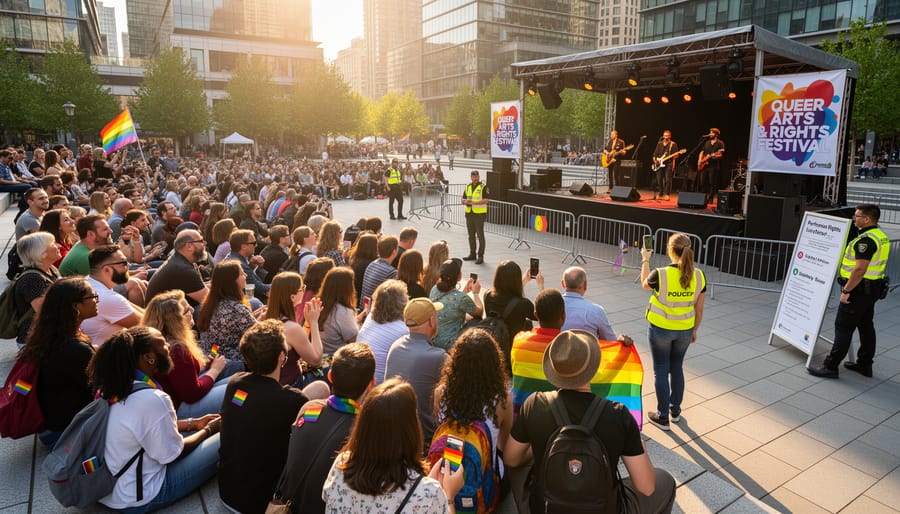
Digital streaming platforms and international licensing create complex terrain for LGBTQ2S+ artists whose work crosses borders into jurisdictions with hostile laws or weak protections. A queer Canadian songwriter’s track distributed through global services may generate royalties in countries where their identity is criminalized, raising questions about which intermediaries handle those funds and whether artists can refuse distribution to specific markets without sacrificing income. Canadian collective management organizations can support these artists by offering granular territory controls in licensing agreements, allowing creators to block reproduction or performance in regions where their safety would be compromised. Moon Face’s international partnerships prioritize collaborations with rights societies in affirming jurisdictions, creating pathways for cross-border royalty flow that respect artists’ values. When Canadian festivals program international queer artists, transparent agreements about performance rights and mechanical licensing ensure visiting creators aren’t inadvertently exposed through metadata visible in hostile home countries. Digital platforms must allow chosen names and flexible gender markers in public-facing profiles while protecting legal identity data required for royalty distribution, a balance Canadian organizations can model through their own systems.
Applications for Musicians and Industry Professionals

For Songwriters and Composers
Songwriters and composers who identify as LGBTQ2S+ hold significant leverage in contract negotiations, even when working with established publishers or labels. Request language that respects your chosen name and pronouns across all agreements, registration forms, and public-facing credits. Specify how you want your work attributed if you transition or change your name, most contracts default to legal names at signing, but you can negotiate clauses that allow updates without renegotiation.
Build autonomy into licensing terms by including approval rights for sync placements, particularly for advertisements or media that may contradict your values or misrepresent queer themes in your music. Standard mechanical licenses don’t require creator approval for covers, but you can negotiate stricter terms in publishing deals that give you veto power over recordings that alter gender pronouns or strip queer context from lyrics.
Designate beneficiaries flexibly. Canadian law recognizes common-law and same-sex partnerships, but many royalty collection systems still use outdated family definitions. Ensure your agreements explicitly name chosen family members, partners, or collectives who should receive performance and mechanical royalties. Update these designations regularly as your relationships and creative partnerships evolve, treating your rights as living documents that reflect your current reality.
For Rights Organizations and Collectives
Rights organizations and collectives hold unique power to dismantle exclusionary systems. Start by revising membership applications and databases: replace binary gender fields with open text or expanded options, allow artists to designate multiple legal names and stage names without hierarchy, and create flexible beneficiary structures that recognize chosen family, polycules, and collective ownership beyond traditional marriage. Staff training matters, educate teams on pronouns, deadnaming harm, and how heteronormative assumptions can delay or misdirect royalty payments. Update licensing templates to include inclusive language around reproduction rights, ensuring queer creators maintain control over how their work is used in contexts that may misrepresent their identity or values. Partner with fair compensation groups already centering LGBTQ2S+ artists to audit your practices and identify gaps. Publish transparent demographic data on who receives payments and whose work is licensed most frequently; disparities often reveal embedded bias. Make policy documents accessible in plain language, not legal jargon, so emerging artists understand their rights without requiring industry connections or expensive advice.
For Venues and Presenters
Venues and presenters hold unique power to translate reproductive justice principles into the lived experience of performance. Securing performing rights goes beyond SOCAN licensing, it means ensuring LGBTQ2S+ artists receive proper compensation while performing in spaces that respect their full humanity.
Start with practical safeguards: establish all-gender washrooms, train staff on pronoun usage and de-escalation of harassment, and create clear protocols for addressing discrimination from patrons or other performers. These aren’t extras; they’re prerequisites for queer artists to perform at their best and for audiences to engage safely.
Review your standard performance agreements. Do they accommodate chosen names alongside legal names for payment processing? Can artists specify their gender presentation requirements without risk of contract termination? Are sound checks scheduled with enough flexibility for artists managing medical transitions or chronic conditions linked to minority stress?
Partner with local LGBTQ2S+ organizations when programming Pride events or queer-themed shows. Pay prevailing rates rather than expecting “community discounts” from artists already undercompensated industry-wide. Recognize that creating affirming performance spaces directly supports the reproductive justice principle: artists deserve environments where their creative work can thrive without compromising their safety or identity.
Common Questions About Queering Reproductive Justice in Music
Many Canadian musicians and industry professionals wonder how to implement queering reproductive justice principles while maintaining legal compliance and international partnerships. These questions reflect genuine concerns about practical change.
Does queering reproductive justice conflict with existing copyright law?
No. This framework works within current copyright and licensing structures while expanding how we administer them, updating forms, metadata systems, and beneficiary designations doesn’t require changing the law itself.
Will updating systems to be more inclusive cost my organization significantly?
Initial updates require staff time and possible database modifications, but these are often low-cost changes like adding fields for chosen names or non-binary gender markers. Many improvements involve policy updates rather than expensive technical overhauls.
How do international agreements recognize these inclusive practices?
International treaties like the Berne Convention focus on protecting creative work, not on how organizations register creators. Canadian collectives can implement inclusive practices domestically while maintaining reciprocal agreements with societies worldwide.
Where should an organization start when implementing these changes?
Begin with a review of registration forms and membership materials to identify exclusionary language or binary-only options. Consult with LGBTQ2S+ members and staff to prioritize changes that will have immediate impact on artist experience and rights protection.
These changes don’t happen overnight, and they don’t require perfection from day one. What matters is beginning the process of making rights administration more inclusive while protecting the legal foundation that ensures fair compensation for all creators.
Some organizations worry about pushback from members who resist change. Experience shows that framing these updates as strengthening protections for all artists, rather than creating special categories, builds broader support. When a collective management organization updates its systems to respect chosen names, that benefits transgender members immediately while also helping cisgender members who perform under stage names or have changed their names for other reasons.
The goal is systems that work for everyone, not parallel structures that segregate queer artists. By embedding reproductive justice principles into standard practices, Canadian organizations can lead internationally while maintaining the partnerships and agreements that support creators across borders.
Queering reproductive justice offers Canadian musicians a powerful framework for reimagining music rights as instruments of liberation rather than gatekeeping. When we center LGBTQ2S+ experiences in how we structure reproduction and performing rights, from registration systems that honour chosen names to royalty models that recognize diverse family structures, we strengthen the fundamental link between creative autonomy and fair compensation for all artists.
This transformation isn’t just theoretical. It demands concrete changes: updating metadata standards, training staff on inclusive practices, and building international partnerships that protect queer artists across borders. Every policy revision that removes barriers for trans and non-binary creators makes the entire system more responsive and equitable.
The music industry’s future depends on embracing these principles. As Canadian organizations lead in connecting reproductive justice to rights management, we create pathways for artists worldwide to claim both their creative work and their identities without compromise. True fair compensation means supporting the whole artist, their music, their autonomy, and their right to thrive on their own terms.
Advocacy doesn’t end with policy. It continues in every licensing decision, every performance agreement, and every conversation about who belongs in music.