
Choosing the right online graphic design program means matching your creative goals with the format, time investment, and practical skills you need to build album art, stage visuals, and merchandise that represent your music authentically. Musicians and music industry professionals increasingly handle their own branding, and formal training in design fundamentals, typography, and digital tools can transform rough ideas into polished, professional visuals that connect with audiences. The decision hinges on three core factors: whether you need a full certificate or targeted software training, how much structured feedback and portfolio development you require, and which programs recognize the specific visual needs of the music sector.
Canadian institutions like George Brown College, Conestoga College, and LaSalle College Vancouver offer verified online design certificates that blend technical instruction with creative critique, while international platforms provide shorter courses focused on single tools or project types. For musicians balancing studio time, touring, and administrative work, program length and scheduling flexibility matter as much as curriculum depth. Self-paced courses suit irregular schedules but demand discipline; cohort-based programs offer built-in accountability and peer review, crucial when you’re learning to critique your own work objectively.
This guide walks you through program types, what to prioritize when comparing options, common pitfalls that waste time and money, and recommendations tailored to where you are in your music career. Whether you’re designing your first album cover or building a consistent visual identity across platforms, the right training equips you to communicate visually with the same intention you bring to your sound.
Why Musicians and Music Professionals Are Turning to Graphic Design Training
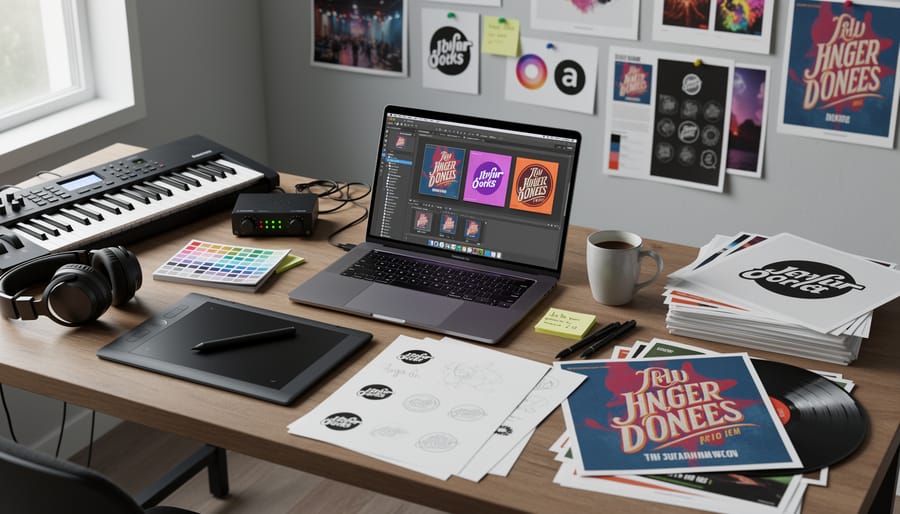
The modern music industry demands more than just talent behind the microphone or instrument. As streaming platforms flatten discovery and social media becomes the primary stage for reaching fans, musicians and songwriters are competing in an increasingly visual marketplace. Album artwork sets the tone before a single note is heard. Tour posters need to stop scrollers mid-feed. Merchandise designs can turn casual listeners into walking billboards. Every interaction, from Instagram story templates to email newsletter headers, requires visual coherence that reinforces an artist’s identity.
Independent musicians and smaller labels in Canada and beyond face a recurring challenge: hiring designers for every release, show announcement, or campaign adds up quickly. A single album cover commission can run several hundred dollars, and ongoing branding support demands retainers many emerging artists can’t sustain. This financial pressure coincides with a creative opportunity. Learning graphic design doesn’t just cut costs; it grants artists full control over their visual narrative. An artist who can translate their sound into imagery moves faster, experiments freely, and maintains consistency across music marketing branding touchpoints without waiting on external timelines or approvals.
The trend extends beyond solo acts. Band managers, promoters organizing festivals and events and label staff increasingly value team members who blend musical knowledge with design fluency. Whether you’re crafting a cohesive visual identity for a debut EP or updating merch graphics between tours, design literacy has shifted from nice-to-have to essential infrastructure for artists serious about building sustainable careers.
Key Factors to Consider When Choosing an Online Graphic Design Program
Selecting the right online graphic design program requires more than browsing course catalogs, it demands a clear understanding of how each program element fits your dual identity as a creative professional. Musicians and music industry professionals juggling studio sessions, live performances, and creative projects need training that respects bandwidth constraints while delivering genuine skill development.
Program format and credential type anchor your decision. Advanced diplomas, such as George Brown’s six-semester Graphic Design (G122) program, provide comprehensive training and PGWP eligibility for international students, making them suitable for those pursuing formal credentials or career transitions. Shorter diploma programs condense essential skills into fewer semesters, while certificate courses target specific competencies like branding or digital illustration. Your choice depends on whether you’re building foundational expertise or filling skill gaps for immediate projects like album packaging or tour visuals.
Accreditation and credential recognition matter significantly in Canada and internationally. Ontario College Advanced Diplomas and equivalent provincial credentials carry weight with employers and clients, whereas unaccredited programs may leave you with skills but no verifiable proof. Verify whether the program is recognized by provincial education bodies and whether its credentials translate to your target markets, particularly if you plan to work across borders or pursue teaching roles.
When evaluating programs, scrutinize these essential criteria:
- Credential type: advanced diploma, diploma, certificate, or modular course
- Software access: bundled Adobe Creative Suite licenses, Figma accounts, or separate purchase requirements
- Schedule flexibility: asynchronous modules, live workshop times, deadline structures compatible with touring
- Portfolio development: built-in client projects, capstone work, feedback cycles
- Cost transparency: upfront tuition, hidden fees for software, materials, or exam registrations
- Instructor credentials: practicing designers, industry experience, accessibility for questions
- Music and arts industry relevance: curriculum addressing album art, merch design, promotional graphics
Curriculum focus should align with your creative needs. Programs emphasizing typography, branding, and digital media serve musicians designing cohesive visual identities across platforms. Packaging design skills translate directly to vinyl sleeves and limited-edition releases. Motion graphics training supports video content for streaming platforms and social channels.
Software training is non-negotiable. Confirm whether programs provide Adobe Photoshop, Illustrator, InDesign, Premiere Pro, and emerging tools like Figma. Some programs bundle licenses; others expect you to purchase subscriptions separately, adding hundreds of dollars annually to your investment.
Flexibility for working musicians determines feasibility. Asynchronous learning, recorded lectures, and self-paced modules accommodate unpredictable schedules better than rigid live sessions. Programs starting in January and September, like George Brown’s G122, offer multiple entry points but still demand sustained weekly commitment across semesters.
Portfolio-building opportunities separate theoretical learning from career-ready output. Programs incorporating real client briefs, industry critiques, and professional presentation standards prepare you to showcase work to labels, venues, and collaborators immediately upon completion.
Types of Online Graphic Design Programs Compared
Online graphic design programs fall into several distinct categories, each suited to different schedules, budgets, and career objectives. Understanding these options helps you choose training that aligns with where you are in your music career and what you need from design skills.
Advanced diploma programs represent the most comprehensive path. George Brown Polytechnic’s Graphic Design (G122) delivers six semesters of full-time online study, starting in January and September, and leads to an Ontario College Advanced Diploma. The program is PGWP-eligible, meaning international students can apply for a post-graduation work permit upon completion. Conestoga also offers a graphic design advanced diploma with similar depth. These programs cover foundational principles, advanced software skills, portfolio development, and specialized topics like motion graphics and packaging design. The trade-off is significant time commitment, roughly three years if you attend full-time, and higher tuition costs. This format suits musicians considering a career pivot, those who want teaching credentials, or artists building a second revenue stream through professional design services. The advanced diploma carries strong industry recognition and provides structured mentorship, which can accelerate skill development if you’re starting from scratch.
| Program Type | Typical Duration | Best For | Credential Value | Example (Canadian) |
|---|---|---|---|---|
| Advanced Diploma | 6 semesters (3 years full-time) | Career transition, teaching roles, comprehensive skill set | High industry recognition, PGWP-eligible | George Brown (G122), Conestoga |
| Shorter Diploma | Varies by provider | Working musicians needing practical skills quickly | Moderate recognition, focused outcomes | LaSalle College Vancouver (Online) |
| Certificate Courses | Varies widely | Targeted learning (album covers, social media graphics) | Skills-based, less formal recognition | Varies by institution |
Shorter diploma programs condense core content into a tighter timeframe. LaSalle College Vancouver offers a Graphic Design diploma delivered online, appealing to professionals who need flexibility. These programs typically prioritize practical application over academic breadth, making them efficient for musicians balancing recording sessions, touring schedules, and promotional work. You’ll still build a portfolio and gain software proficiency, but the curriculum may skip some theoretical depth or elective specializations. Cost and time savings make this route attractive if your primary goal is designing your own album art, merchandise, or social media assets rather than launching a full-time design practice.
Certificate courses and modular offerings provide the narrowest focus. These might target specific skills, typography fundamentals, Adobe Illustrator for beginners, or branding essentials, and run anywhere from a few weeks to several months. They’re ideal for artists who already have some design experience or who need to solve a specific creative challenge quickly. The credential carries less weight in formal hiring contexts, but the skills are immediately applicable. This format also allows you to stack certificates over time, building competence incrementally as your schedule and budget allow.
Choosing between these formats hinges on your timeline, financial resources, and career aspirations. Advanced diplomas demand the most upfront investment but deliver recognized credentials and comprehensive training. Shorter diplomas strike a balance between depth and flexibility. Certificates offer targeted, low-commitment entry points. Much like understanding AI royalties insights helps musicians optimize revenue streams, selecting the right program type ensures you invest your time and money where it yields the greatest creative and professional return.
What to Look for in the Curriculum and Software Training
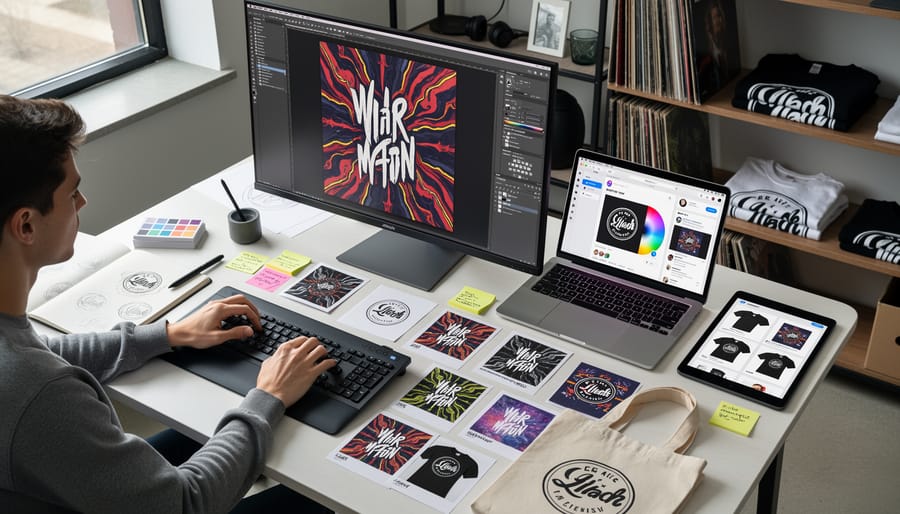
A strong online graphic design program balances foundational theory with hands-on application. Look for curriculum that starts with core design principles, composition, visual hierarchy, grid systems, before moving into specialized topics like typography, color theory, and digital illustration. Musicians creating album covers, tour posters, or merchandise need programs that emphasize branding and identity work, teaching you to develop cohesive visual systems that align with your sonic identity. Motion graphics training is particularly valuable if you’re producing music videos, social media reels, or animated visualizations for live performances. Web design basics round out the skill set, equipping you to build artist websites or optimize your practice space both physically and digitally through better visual communication.
Software training separates effective programs from theoretical ones. Industry-standard tools, Adobe Photoshop for image editing, Illustrator for vector work, InDesign for layout, Premiere Pro for video, and Figma for collaborative design, form the backbone of professional practice. Programs should offer structured tutorials and real project work in each tool, not just brief overviews. George Brown’s advanced diploma, for example, integrates software training throughout its six-semester structure, building proficiency through repeated application. Some programs include software licenses in tuition, while others assume students will purchase Adobe Creative Cloud subscriptions (approximately $75 CAD monthly for students) or use free alternatives during training.
Before committing, verify exactly what’s included. Ask whether the program provides temporary software access, requires proof of purchase, or offers tutorials for free tools like GIMP or Canva as substitutes. For working musicians balancing budgets across instruments, recording equipment, and now design software, knowing the full cost upfront prevents surprises. Programs with strong software training also tend to include portfolio-building components, guided critiques, iterative revisions, and client simulation projects, that prepare you to deliver professional-quality visuals for your music career from day one.
Common Mistakes to Avoid When Selecting a Program

Avoiding common selection errors will save you time, money, and frustration. Many musicians enroll in programs that look appealing on the surface but fail to meet their practical needs once the workload begins.
One frequent mistake is skipping accreditation verification. Not all online programs carry recognized credentials, and some offer certificates that hold little weight with employers or clients. For Canadian learners, confirming whether a diploma qualifies for Post-Graduation Work Permit (PGWP) eligibility matters if you plan to work in Canada after completing your studies. Programs like George Brown’s six-semester advanced diploma (PGWP-eligible, starting January and September) provide that recognized credential, while shorter offerings may not.
Hidden costs catch many off guard. Tuition is just the starting point. You’ll likely need subscriptions to Adobe Creative Cloud, stock photography, fonts, external hard drives, and exam or portfolio review fees. Budget for the full cost of training, not just the advertised program price.
Flexibility is critical for working musicians. Rigid deadlines, mandatory synchronous sessions, and inflexible assignment schedules clash with touring, recording, and performance commitments. Programs that offer asynchronous coursework and self-paced modules give you breathing room when you’re on the road or in the studio.
- Skipping accreditation checks and credential recognition research
- Ignoring total cost beyond tuition (software, materials, exam fees)
- Undervaluing schedule flexibility for touring and recording demands
- Neglecting portfolio-building support and instructor feedback quality
- Assuming all online programs offer the same depth and industry connections
Portfolio-building support varies widely. Programs that treat portfolio development as an afterthought leave you without the finished work samples you need to attract clients or secure design roles. Look for curriculum that emphasizes real-world projects, instructor critiques, and portfolio presentation coaching.
Finally, don’t assume every program understands music and entertainment visual needs. Generic design training may ignore album packaging, merchandise templates, promotional materials, and branding for artists. Programs with instructors who have industry experience or alumni working in music-adjacent fields will better serve your creative goals.
Recommendations: Matching Programs to Your Music Career Goals

Your career goals and current workload determine which program format fits best. Musicians building a second career or planning to teach design benefit from the comprehensive training and formal recognition of an advanced diploma. George Brown’s six-semester Graphic Design program, for instance, delivers deep skill development across typography, branding, and digital media while offering Post-Graduation Work Permit eligibility for international students. Conestoga and LaSalle College Vancouver similarly provide advanced diploma credentials that carry weight with Canadian employers and creative agencies. These programs suit artists prepared to commit significant time alongside their music practice.
Working musicians juggling tours, recording sessions, and festival slots often need practical skills without a multi-year commitment. Shorter diploma formats compress essential training into focused timelines, covering album artwork, merchandise layout, and promotional graphics without the academic breadth of advanced programs. This path delivers portfolio-ready work faster, which matters if you’re preparing merch for upcoming gigs or want to design assets for Canadian festivals August bookings and beyond.
Modular or certificate courses target specific gaps: one might concentrate on packaging design for vinyl and cassette releases, another on social media templates and motion graphics for streaming platforms. These flexible options let you stack skills over time as your schedule allows, paying only for the training you need right now.
Canadian programs offer domestic learners strong credential recognition and work-permit pathways, while international connections within curricula prepare graduates for the global music market’s visual demands. Match the program’s time commitment, cost structure, and learning outcomes to your bandwidth, budget, and where you see your creative practice heading. Choose training that genuinely serves your trajectory, not just the longest or most prestigious option available.
Frequently Asked Questions
Can I study graphic design online while touring or recording?
Yes, many online programs offer asynchronous learning that lets you work through materials on your own schedule. However, you’ll need to plan around assignment deadlines and any scheduled critiques or group sessions, so review the program structure carefully before enrolling.
Do I need prior design experience to enroll?
Most foundational programs accept beginners with no prior design experience. Advanced diploma programs like George Brown’s Graphic Design (G122) focus on building skills from the ground up, though you’ll typically need to meet basic academic entry requirements.
What credential is most recognized in the music and entertainment industries?
Advanced diplomas from accredited institutions carry strong recognition because they demonstrate comprehensive training and commitment. In Canada, Ontario College Advanced Diplomas from institutions like George Brown and Conestoga are widely respected, particularly when paired with a solid portfolio of work.
Will I have access to design software during the program?
Some programs include temporary licenses for Adobe Creative Suite or other tools as part of tuition, while others expect you to purchase your own subscriptions. Always confirm software access and associated costs before you commit, as these expenses add up quickly.
When evaluating any program, remember that the strength of your portfolio matters as much as your credential. A shorter certificate course paired with personal projects can be just as valuable as a longer diploma if you’re focused on specific skills like album cover design or social media graphics. Canadian programs that are PGWP-eligible, such as George Brown’s six-semester Graphic Design advanced diploma, offer international students the added benefit of work permit eligibility after graduation, making them attractive options for those planning to stay and build careers in Canada’s music and creative industries. The right fit depends on your current skill level, available time, and career ambitions, so weigh your options against the decision criteria outlined earlier in this guide.
Graphic design training equips musicians and music professionals with practical skills that translate directly into stronger branding, cost savings, and creative autonomy. Whether you’re designing album covers, tour posters, or social media content, the ability to execute your own visual identity removes dependence on external designers and shortens the gap between concept and finished work.
Choosing the right program requires honest evaluation of your schedule, budget, and career priorities. Advanced diplomas like George Brown’s six-semester offering provide comprehensive training and work-permit eligibility, making them suitable for those committing to a formal credential. Shorter diplomas and certificate courses serve working artists who need targeted skills without lengthy timelines. Compare curriculum depth, software access, portfolio support, and instructor experience before enrolling, and verify that any credential aligns with your long-term goals.
Moon Face supports the holistic development of Canadian and international music professionals, recognizing that visual literacy strengthens artistic impact and business independence. Research thoroughly, request detailed program information directly from institutions, and select training that fits your bandwidth and creative direction. The investment in design skills pays dividends across every facet of a music career, from first single to full discography.