
Contemporary dance for beginners is accessible to anyone willing to move with intention, regardless of age or prior training. You can start right now with nothing more than comfortable clothing, a clear floor space, and a willingness to explore how your body moves through space and emotion. Unlike classical ballet or rigid technical forms, contemporary dance prioritizes personal expression and natural movement patterns, making it one of the most welcoming entry points into the world of dance.
The practice emerged from modern dance pioneers who rejected the strict formality of ballet, creating a vocabulary that blends floor work, improvisation, release technique, and emotional storytelling. Today, contemporary dance has evolved into a global language practiced in professional companies, community studios, and home spaces across Canada and internationally. What makes it particularly suited for beginners is its emphasis on finding your own authentic movement rather than replicating prescribed positions.
Starting contemporary dance requires understanding fundamental concepts like weight transfer, breath integration, and spatial awareness, but you don’t need years of training to experience the joy and creative freedom it offers. Most beginners notice improved body awareness within weeks and develop a personal movement vocabulary within months. The key is consistent practice, curiosity about how your body responds to different prompts, and patience as you build both technical skills and artistic confidence.
This guide walks you through the essential tools, safety considerations, foundational techniques, and progress markers that will help you establish a sustainable contemporary dance practice. Whether you’re exploring movement for fitness, emotional expression, or artistic development, you’ll find concrete steps to begin your journey with confidence.
What You Need to Get Started
Physical Requirements and Clothing
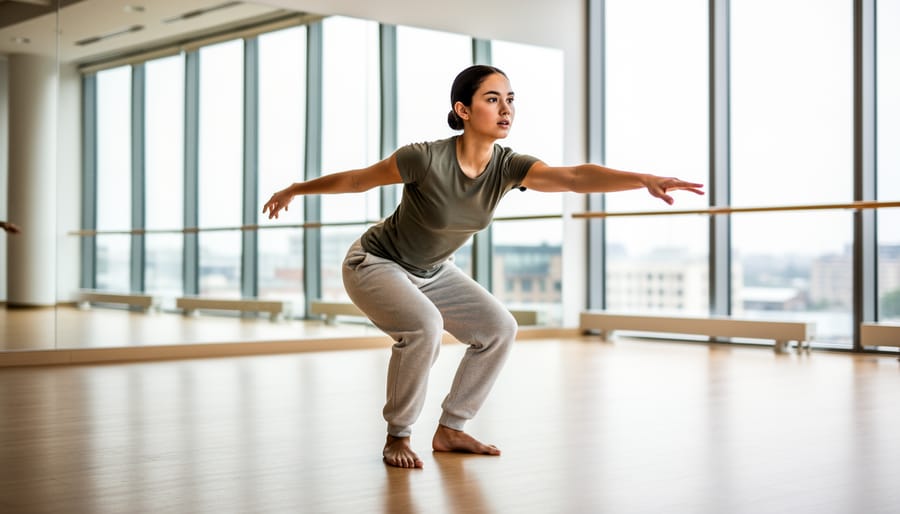
Contemporary dance is wonderfully accessible when it comes to what you wear. Choose comfortable, fitted clothing that allows unrestricted movement, leggings or fitted joggers with a tank top or fitted t-shirt work well. Avoid baggy clothes that hide your body lines, as instructors need to see your alignment and movement quality.
Most contemporary classes are done barefoot, which helps you connect with the floor and develop proper foot articulation. Some dancers prefer foot undies or dance paws for grip and protection, but these aren’t necessary for beginners. Regular socks are unsafe, they’ll cause you to slip.
Bring a water bottle and arrive hydrated. A small towel can be useful, though many studios provide them. Don’t worry about specialized dancewear for your first class; what matters is that you can move freely and your instructor can observe your form. Hair should be secured away from your face so you can focus without distraction.
Skip jewelry that might catch or distract. You’re ready to start with what’s likely already in your closet.
Finding the Right Space and Resources
Start by researching studios and community centers in your area that explicitly welcome beginners. Look for programs that use phrases like “no experience necessary” or “foundations” in their descriptions. Many established dance studios now offer beginner-specific tracks rather than dropping new dancers into ongoing intermediate classes.
Online platforms have expanded access considerably for those without local options. Video tutorials and structured online courses let you learn basic movement vocabulary and principles at your own pace before committing to in-person classes. These resources work best when they include clear explanations of technique and offer modifications for different ability levels.
Consider workshop formats as your entry point. Single-session workshops designed for beginners provide a low-commitment way to experience contemporary dance without enrolling in a full term. Organizations like thefifthdance offer accessible beginner weekends that introduce fundamental techniques in a supportive environment. These concentrated formats often attract other newcomers, creating a peer group at the same starting point.
When evaluating any resource, check whether the instructor or organization addresses beginners directly in their materials. Teaching style matters as much as content, look for approaches that emphasize exploration and personal interpretation rather than demanding perfection from day one.
Safety and Preparation for Beginner Dancers
Warming Up and Cooling Down
A proper warm-up prepares your body for contemporary dance’s fluid, full-body movements and reduces injury risk. Begin with 5-10 minutes of gentle cardiovascular activity, walking in place, easy jogging, or flowing arm circles, to increase blood flow and raise your core temperature. Always warm up to prepare your muscles before stretching.
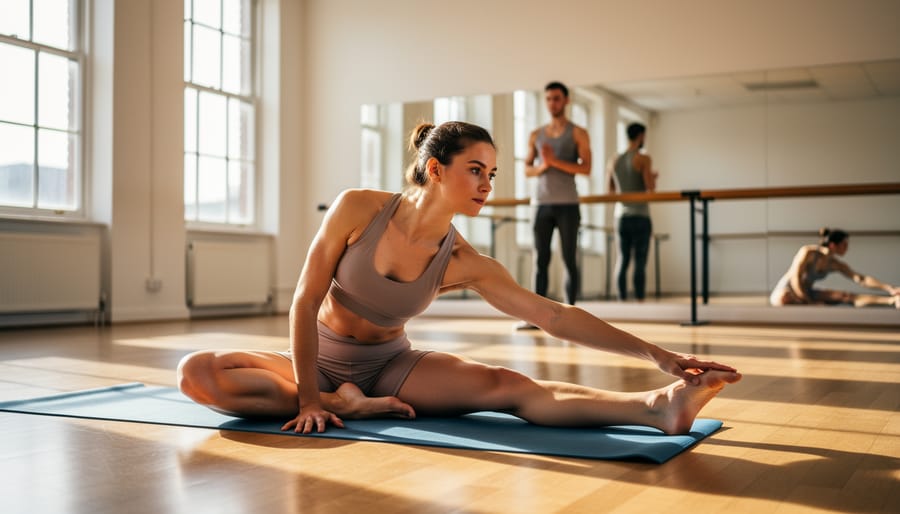
Follow with dynamic stretches that mirror contemporary dance movements: leg swings (forward-back and side-to-side), gentle torso twists, shoulder rolls, and cat-cow spine articulations. These active movements prepare your joints and muscles for the range of motion you’ll use in class. Avoid static stretching before dancing, as it can temporarily decrease power and coordination.
After class, dedicate 5-10 minutes to cooling down with slower movements and gentle static stretches. Focus on areas you used intensely: hip flexors, hamstrings, spine, and shoulders. Hold each stretch for 20-30 seconds without bouncing. This post-class routine helps prevent soreness and maintains the flexibility gains you’ve developed during practice.
Recognizing and Respecting Your Limits
Learning contemporary dance means pushing yourself, but not pushing *through* warning signs. Your body will communicate clearly if you listen, sharp pain, joint instability, or dizziness require immediate attention, while muscle fatigue and mild discomfort are normal parts of building new movement patterns.
Start with beginner-level classes designed for your current abilities rather than jumping into intermediate sessions that assume prior training. A proper beginner workshop, like those offered at local events specifically marked for newcomers, gives you appropriate challenge without overwhelming your untrained body. If a movement feels impossible or causes shooting pain, modify it or sit out that combination, experienced teachers expect and encourage this approach.
Progress gradually over weeks and months, not days. Your muscles, tendons, and joints need time to adapt to contemporary dance’s unique demands. Rest between sessions matters as much as practice itself. If you’re consistently sore for days after class, you’re likely overdoing it. Scale back intensity or frequency until your recovery time shortens. Building sustainable dance practice means respecting where you are now while working toward where you want to be.
Step-by-Step: Your First Contemporary Dance Experience
Step 1: Research and Choose Your Entry Point
Your first decision is choosing which learning format matches your current situation and commitment level. Beginner contemporary dance opportunities generally fall into three categories: single drop-in workshops, beginner weekends that combine multiple sessions, and ongoing weekly classes.
Single workshops offer the lowest-risk entry point. You attend one session, typically two to three hours, and experience contemporary movement without long-term commitment. This works well if you’re testing your interest or have an unpredictable schedule.
Beginner weekends provide concentrated learning over consecutive days, often featuring multiple workshops with different instructors. These immersive experiences accelerate your initial progress and expose you to varied teaching styles. The structured format helps you build momentum that single sessions sometimes lack.
Ongoing weekly classes create consistent practice habits and allow you to develop relationships with instructors and fellow dancers. However, they require sustained commitment and work best once you’ve confirmed your interest through shorter introductory experiences.
The distinction between beginner and intermediate levels matters more than many newcomers realize. Beginner sessions assume no prior dance experience and focus on fundamental movement principles, spatial awareness, and basic contemporary vocabulary. Intermediate classes expect familiarity with dance concepts, faster learning pace, and some technical foundation. When descriptions say “beginner or intermediate,” they’re designed to accommodate mixed experience levels, making them safe choices for your first exposure.
Step 2: Understand Workshop Formats and Pricing
Contemporary dance workshops typically come in two main formats, each suited to different schedules and commitment levels. Single workshops run for two to three hours and let you sample the style without a major time investment. These sessions focus on foundational techniques and give you a taste of how contemporary movement works. Full-weekend formats spread across multiple sessions, offering deeper immersion and more time to build on what you learn in each class.
Budget considerations matter when choosing your format. Single workshops generally cost around $40 plus tax, making them an accessible entry point for curious beginners. Full weekends require a larger upfront commitment, typically around $105, but deliver better value per session if you’re ready to dive in. Understanding these pricing structures helps with funding and budgeting for your dance education from the start, whether you begin with one session or commit to a weekend of learning.
Step 3: Register and Secure Your Spot
Most contemporary dance workshops use straightforward online registration systems. You’ll typically need basic contact information, emergency contact details, and sometimes a brief indication of your dance experience level. Some studios ask about injuries or physical limitations to ensure instructors can offer appropriate modifications.
For popular beginner workshops, register as soon as dates are announced. Beginner-specific sessions often fill quickly because they’re designed with limited class sizes to allow for individual attention. If a workshop offers early-bird pricing, take advantage, it secures your spot and reduces cost.
Check the cancellation policy before registering. Life happens, and knowing whether you can receive a refund or transfer your registration provides peace of mind. If a session is full, ask about waitlist options. Studios often open additional spots or notify you if someone cancels, giving you a second chance at popular beginner opportunities.
Step 4: Prepare for Your First Session
In the days before your first contemporary dance session, focus on practical preparation rather than perfection. Hydrate well, get adequate sleep, and avoid intense physical activity the day before if you’re not regularly active. Eat a light meal two hours before class so you have energy without feeling heavy.
Pack your bag the night before with your chosen attire, a water bottle, and a small towel. If you’re attending a workshop that runs several hours, bring a light snack. Locate the studio ahead of time and plan to arrive 10-15 minutes early, giving yourself buffer time for traffic or parking.
Mentally, remind yourself that everyone in a beginner session is learning. Review any pre-class communications from the instructor, but don’t attempt to study contemporary dance technique online the night before. You’ll learn the movement vocabulary in class. The most valuable preparation is simply showing up rested, nourished, and open to the experience.
Step 5: Navigate Your First Class
Your first class will likely begin with the instructor introducing themselves and creating a welcoming atmosphere. Most contemporary workshops start with a guided warm-up that gradually introduces the movement vocabulary you’ll explore. The instructor will demonstrate movements and often work alongside you initially, breaking down sequences into manageable parts.
Don’t be surprised if the class feels unfamiliar at first. Contemporary dance emphasizes fluidity and connection rather than rigid positions, so you might feel uncertain about whether you’re doing movements “correctly.” This is normal. Instructors expect beginners to interpret movements through their own bodies and typically offer variations for different skill levels.
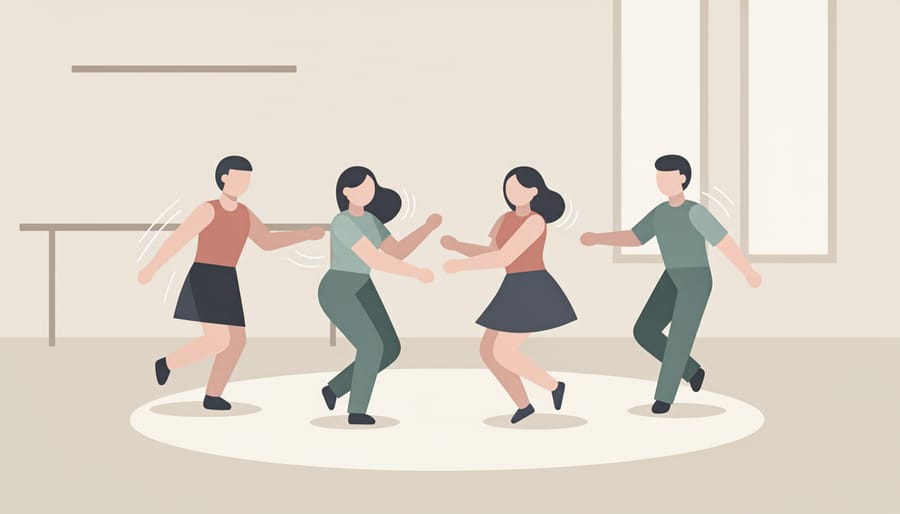
You’ll probably notice other participants have varying experience levels, even in beginner sessions. Focus on your own exploration rather than comparing yourself to others. Most instructors circulate during class to offer individual feedback and adjustments. If you’re confused about a movement, ask, instructors appreciate questions and often use them to clarify concepts for the entire group.
Current Opportunities for Beginner Contemporary Dancers
The contemporary dance landscape for beginners continues expanding, with studios and organizations recognizing the need for accessible entry points. While Canadian dance festivals and August music festivals often showcase advanced work, dedicated beginner programs now offer structured introductions to the form.
Organizations like thefifthdance create targeted beginner opportunities through their Adult Summer Workshops, structured over two weekends to allow gradual development. Their Beginner Weekend format exemplifies accessible programming, offering contemporary dance instruction specifically designed for newcomers and intermediate dancers. A representative workshop with instructor Alli Carry scheduled for July 14th from 2:00 PM to 4:30 PM demonstrates typical session timing, two and a half hours provides substantial instruction without overwhelming new dancers.
The pricing structure for these opportunities reflects different commitment levels. Single workshop sessions typically cost $40 plus HST, letting you test contemporary dance before deeper investment. Full weekend packages at $105 offer better value for committed learners, providing multiple sessions to build foundational understanding and movement vocabulary.
When evaluating beginner opportunities, prioritize programs explicitly labeled for your level. Workshops combining beginner and intermediate dancers can work well, offering peer learning opportunities while maintaining accessibility. Look for clear time commitments, transparent pricing, and instructor credentials that demonstrate teaching experience with adult beginners rather than only performance backgrounds.
How to Know You’re Making Progress
Technical Markers of Improvement
Your early progress in contemporary dance shows itself in specific, observable ways. Within your first few weeks, you’ll notice improved balance during simple weight shifts and the ability to hold positions without wobbling. Your coordination develops as movements that initially felt disconnected start flowing together, transitions between floor work and standing become smoother, and your arms no longer feel like separate entities from your torso.
Movement quality marks significant growth. Instead of rushing through sequences, you’ll find yourself able to control the speed of your movements, creating dynamics between fast and slow. Your range of motion expands naturally as muscles adapt, allowing deeper curves in your spine and fuller extensions of limbs. You’ll execute basic contemporary vocabulary, contractions, releases, spirals, with increasing clarity rather than approximation.
Spatial awareness improves noticeably. You’ll move through space with better judgment of distance and direction, no longer colliding with others or misjudging the studio boundaries. Your ability to remember short movement phrases strengthens, requiring fewer repetitions to retain choreography. Perhaps most tellingly, you’ll recognize when you’re truly moving from your core rather than just using your limbs, creating the connected, full-body movement that defines contemporary dance technique.
Artistic and Expressive Growth
Artistic growth reveals itself in subtler ways than technical mastery. You’ll notice you’re making expressive progress when movement begins to feel personally meaningful rather than purely mechanical, when you find yourself initiating sequences with your own emotional texture instead of just copying shapes. Your willingness to take creative risks during improvisation increases, and you become less concerned with looking “correct” and more interested in what a movement communicates.
Confidence markers include choosing stronger, more committed gestures over tentative half-movements, sustaining eye contact during partnered work, and feeling comfortable exploring the full spatial range of the studio rather than staying in safe corners. You might catch yourself naturally responding to music with spontaneous movement outside class, or finding connections between contemporary techniques and how you move through daily life.
Perhaps the clearest indicator: you stop monitoring yourself constantly through an imagined mirror. Your internal dialogue shifts from “Am I doing this right?” to “What does this feel like?” When you finish a phrase genuinely present in your body rather than mentally reviewing your performance, you’ve crossed into authentic artistic engagement. This shift from self-consciousness to self-expression marks genuine development beyond technique alone.
Common Questions About Starting Contemporary Dance
Starting contemporary dance raises practical questions for most newcomers. Here are answers to the concerns I hear most often from people considering their first class.
Do I need prior dance experience to start contemporary dance?
No prior experience is necessary for beginner-level contemporary classes. The form welcomes complete beginners and focuses on exploring movement rather than perfecting established techniques from the start.
What should I wear to my first contemporary dance class?
Wear comfortable, fitted clothing that allows free movement, leggings or dance pants with a fitted top work well. Most contemporary classes are barefoot, though some studios allow soft dance shoes or socks with grip.
How fit do I need to be to start contemporary dance?
Contemporary dance accepts all fitness levels. You’ll build strength, flexibility, and stamina gradually through practice, and instructors accommodate different physical abilities within beginner classes.
What’s the difference between contemporary and other dance styles?
Contemporary emphasizes creative expression, natural movement quality, and floor work more than strict technique. It draws from ballet and modern dance but encourages personal interpretation and emotional connection to movement.
Beyond these basics, many beginners wonder about time commitment. Starting with a single workshop or beginner weekend gives you exposure without long-term obligations. The schedule flexibility in contemporary dance differs from other performing arts, similar to how music marketing trends have shifted toward adaptable, audience-centered approaches, contemporary dance instruction increasingly offers drop-in classes and short-term workshop series rather than requiring semester-long enrollment.
Cost concerns are valid. Workshop pricing varies, but beginner-friendly options exist at most price points. Single sessions typically run more affordably than full weekends, letting you test your interest before investing further.
The question of age comes up frequently. Contemporary dance welcomes adult beginners of all ages. Many studios specifically design adult beginner classes to address the unique needs of people starting dance later in life, without the competitive pressure or age restrictions common in other dance forms.
Regarding pace and progress, expect gradual development rather than immediate mastery. Contemporary dance values your unique movement quality and expression from day one, so progress looks different than achieving specific technical milestones. You’re developing both physical skills and artistic confidence simultaneously.
Starting contemporary dance requires nothing more than curiosity and the willingness to show up. The barriers that might seem daunting, lack of experience, concerns about fitness level, uncertainty about what to expect, dissolve once you take that first step into a beginner class or workshop. Contemporary dance welcomes newcomers precisely because it values individual expression and personal exploration over rigid technical prerequisites.
The dance community actively supports beginners through dedicated workshops, patient instruction, and an understanding that everyone starts somewhere. Teachers structure beginner sessions to build confidence alongside capability, creating environments where questions are encouraged and progress happens at your own pace. Fellow dancers, many of whom were beginners not long ago, understand the experience of starting fresh and typically offer encouragement rather than judgment.
Your journey begins with a single decision to try. Whether you register for a weekend workshop, sign up for an introductory class, or simply start exploring movement at home, that initial commitment matters more than perfect technique or prior training. Contemporary dance grows with you, each session builds on the last, each movement teaches you something new about your body’s potential.
The value isn’t only in becoming a skilled dancer. You’ll discover new ways your body can move, connect with others who share your curiosity, and develop an artistic practice that offers both physical challenge and creative expression. Start now, and let your relationship with dance unfold organically.