
Mediterranean interior design centers on three defining pillars: warm earth-toned palettes, natural materials like terracotta and limestone, and an effortless flow between indoor and outdoor living spaces. This aesthetic, rooted in the sun-drenched coastal regions of Spain, Italy, Greece, and southern France, translates centuries of architectural wisdom into homes that prioritize comfort, light, and organic texture over rigid formality.
In 2026, the style is experiencing a notable evolution. Modern Coastal Mediterranean has emerged as a leading home design trend this year, embracing warmth and restraint while favoring spaces that feel as good to live in as they look. The shift reflects broader design movements toward tactile materiality, emotive palettes, pure geometries, and sculptural volumes. Cloud Dancer, Pantone’s Colour of the Year for 2026, exemplifies this direction. This ethereal white shade serves as a symbol of calm in a frenetic society and provides an ideal backdrop for the brass and bronze accents that anchor Mediterranean spaces.
What makes this approach particularly compelling for creative professionals is its inherent adaptability. Whether you’re designing a studio that needs to inspire focused work or a gathering space that encourages collaboration, Mediterranean principles offer a framework that balances sensory richness with functional clarity. The style doesn’t demand a coastal location or unlimited budget. Instead, it asks for intentionality: choose materials that age gracefully, select colors that reflect natural light, and create transitions between spaces that feel intuitive rather than forced.
The result is an environment that supports both productivity and rest, a quality that resonates across international design communities and here in Canada, where we’re increasingly drawn to interiors that offer refuge without sacrificing character.
What Defines Mediterranean Interior Design in 2026
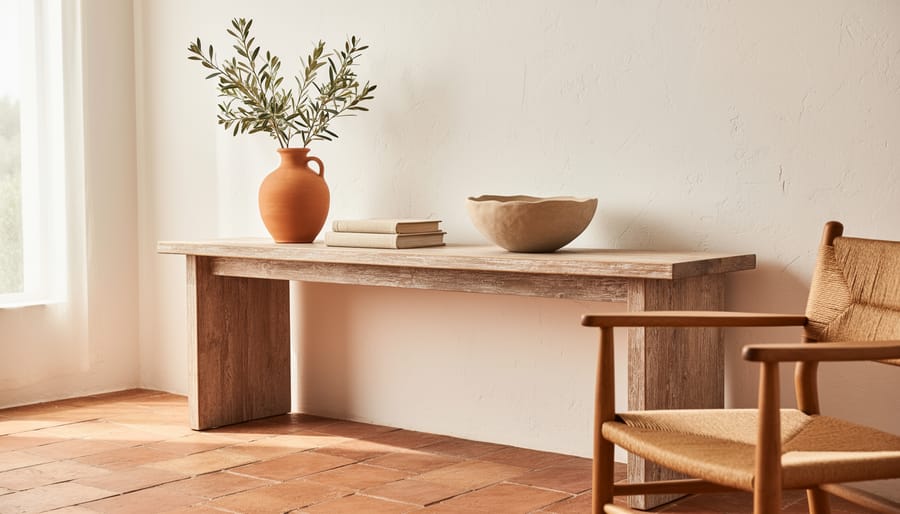
Mediterranean interior design has always drawn its character from sun-drenched coastlines, ancient craft traditions, and the textured beauty of natural materials. In 2026, this aesthetic gains fresh momentum as Modern Coastal Mediterranean emerges as a named trend, shifting the style away from rustic cliché toward a more refined balance of warmth and restraint. Instead of heavy, ornate details, the approach now favors clean lines, sculptural forms, and spaces designed to feel as inviting as they look, qualities that resonate with musicians and artists who understand that environment shapes creative output.
The 2026 trend landscape emphasizes tactile materiality and pure geometries, moving Mediterranean interiors beyond visual appeal into physical experience. Surfaces matter: lime-washed walls with subtle irregularities, hand-thrown ceramic vessels, linen that softens with use. These textures invite touch and create depth without clutter, much like a well-arranged recording space where every element serves both function and feel. Sculptural volumes, arched doorways, rounded plaster details, organically shaped furnishings, add three-dimensional interest while maintaining the calm, uncluttered quality creative professionals need to focus.
Cloud Dancer, Pantone’s Colour of the Year for 2026, plays a central role in this evolution. Described as an ethereal white and a symbol of calm, it provides a versatile, light-enhancing backdrop that works across Canada’s varied climates and light conditions. Paired with warm terracotta, sun-faded blues, and earthy ochres, Cloud Dancer lets emotive palettes breathe without overwhelming a space. Brass and bronze accents bring warmth and craft detail, echoing the artisan values that musicians and makers hold dear.
What sets Mediterranean design apart now is its refusal to choose between beauty and livability. Surfaces patina with age, materials improve through use, and spaces adapt to how people actually work and create. This isn’t decorating for show; it’s building environments that support the slow, deliberate work of making art, whether that’s composing, rehearsing, or simply thinking clearly in a room that feels right.
Signature Elements and Materials
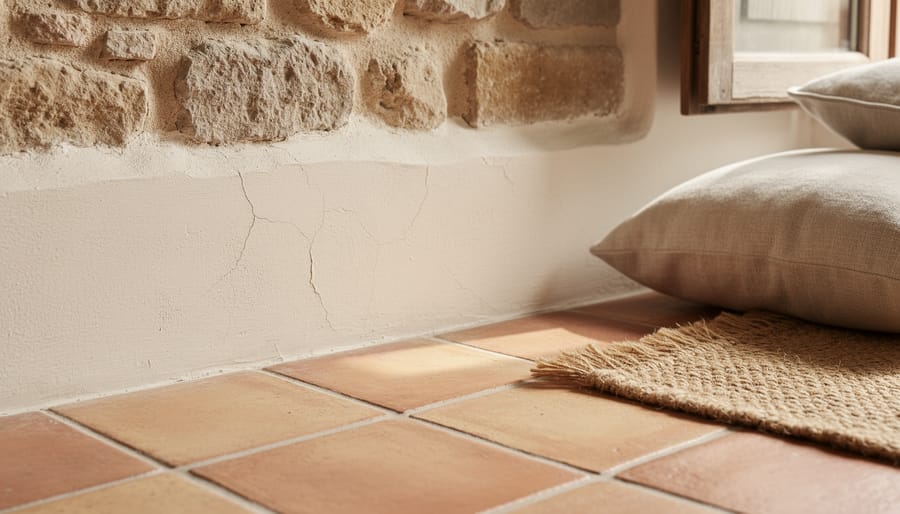
Tactile Materiality and Sculptural Volumes
Mediterranean interiors in 2026 embrace tactile materiality as a defining principle, surfaces invite touch, not just the eye. Rough-hewn plaster walls catch light differently throughout the day, their irregular finish adding warmth that flat paint can’t deliver. Terracotta tiles, hand-poured concrete counters, and linen upholstery layer textures that ground a room in physical presence, making spaces feel lived-in from the start rather than staged.
Sculptural volumes work alongside these textures to create visual interest without clutter. A chunky limestone fireplace surround, an arched doorway with deep reveals, or a freestanding ceramic vessel becomes a focal point through form alone. These three-dimensional elements break up flat planes and add rhythm to a room, much like dynamic range shapes a musical arrangement.
The interplay between texture and shape defines modern Mediterranean spaces: a smooth travertine bench against a textured stucco wall, a rounded plaster column anchoring an open corner. Each material choice and architectural gesture contributes depth, transforming rooms into environments you experience with all your senses, not just visually, but through the way light, shadow, and surface interact.
Artisan Craft and International Influence
Mediterranean interior design has always celebrated handmade elements, wrought iron fixtures shaped by blacksmiths, hand-painted ceramic tiles from small workshops, woven baskets and textiles from artisan collectives. These pieces carry the marks of their makers: slight variations in glaze, uneven weaves, hammer marks in metal. They anchor a space in human skill rather than mass production, creating rooms that feel personal and alive.
This tradition parallels how Canadian musicians and artists engage with international craft communities. A songwriter collaborating with producers across continents, a visual artist sourcing materials from traditional makers abroad, these exchanges honour specific techniques and regional knowledge while building something new. Mediterranean design draws from the same impulse: Moroccan zellige tiling, Greek pottery, Spanish wrought iron, Italian plasterwork. Each tradition contributes its own language, but the common thread is respect for craft and the willingness to learn from other places.
Bringing artisan pieces into a creative workspace does more than add visual interest. It creates a physical reminder that quality work takes time, that imperfection often signals authenticity, and that connecting with makers around the world enriches what you create at home.
Color Palettes for 2026: Cloud Dancer and Emotive Hues
Color palettes rooted in nature define Mediterranean interior design in 2026, balancing calm neutrals with warm, sun-soaked hues that evoke coastal landscapes and artisan traditions. This year’s trend leans toward emotive palettes that feel personal and grounding, a shift away from stark minimalism toward spaces that hold warmth and memory.
Cloud Dancer, Pantone’s Colour of the Year for 2026, anchors this evolution. Described as an ethereal white shade that serves as a symbol of calm in a frenetic society, it provides a serene, versatile backdrop without feeling sterile. Unlike cooler whites, Cloud Dancer carries subtle warmth, making it ideal for walls, ceilings, and large surfaces where you want light to breathe without coldness. It pairs beautifully with brass and bronze accents, softening metallic tones and creating a refined contrast that feels timeless rather than trendy.
The real character emerges when you layer Cloud Dancer with Mediterranean’s signature emotive hues: warm terracottas, soft blues reminiscent of weathered shutters, sun-bleached yellows, and earthy greens pulled from olive groves and coastal hillsides. These colors ground a space in the natural world, creating environments that feel lived-in and authentic, qualities musicians and creative professionals often seek in their workspaces.
| Color Family | Typical Shades | Mood / Effect | Ideal Accent Pairings |
|---|---|---|---|
| Neutral Whites | Cloud Dancer, warm cream, linen | Calm, airy, versatile backdrop | Brass, bronze, terracotta |
| Terracotta / Clay | Burnt sienna, rust, warm clay | Grounding, warm, earthy | Sage green, Cloud Dancer, natural wood |
| Blues | Soft azure, weathered denim, sea glass | Serene, coastal, contemplative | Sun-bleached yellow, white linen, wrought iron |
| Earthy Greens | Olive, sage, muted eucalyptus | Restful, organic, balanced | Terracotta, natural stone, aged brass |
| Sun-Bleached Yellows | Soft ochre, pale saffron, wheat | Warm, uplifting, gentle | Soft blues, Cloud Dancer, woven textures |
The key is restraint. Rather than saturating a room, use terracotta or blue as accent walls, textiles, or ceramics against Cloud Dancer’s neutral field. This creates visual rhythm without overwhelming the senses, allowing natural light and texture to take center stage. Brass or bronze hardware, light fixtures, and decorative elements add depth and warmth, bridging the palette with artisan craft. The result is an environment that feels both serene and alive, a space where creativity can settle and focus.
Bringing Mediterranean Design Into Creative Workspaces
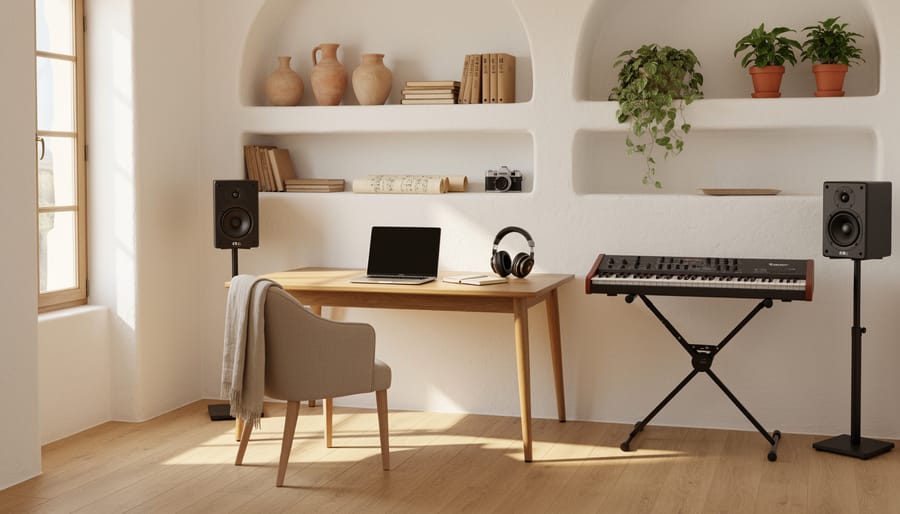
Mediterranean design principles translate naturally into creative workspaces where focus, comfort, and inspiration matter. Musicians and songwriters spend long hours in studios and rehearsal rooms, environments that should support both technical precision and creative flow. Applying this aesthetic means prioritizing natural light, warm textures, and acoustic balance rather than chasing trends that fade quickly.
Start with light. Mediterranean interiors rely on abundant daylight filtered through sheer linen curtains or adjustable shutters. Position desks and workstations near windows where possible, maximizing natural illumination without glare on screens or sheet music. If natural light is limited, choose warm-toned LED fixtures that mimic daylight rather than harsh overhead fluorescents. Wall sconces with fabric shades or ceramic housings add both task lighting and architectural interest.
Acoustic considerations shape Mediterranean spaces differently than purpose-built recording studios, but the principles align. Natural materials, plaster walls, terracotta tile, exposed wood beams, absorb and diffuse sound in ways that feel organic. Layer wool or jute rugs over hard floors to reduce reverb without deadening the room completely. Heavy linen drapes or woven tapestries on one wall soften echoes while adding texture. These choices create a balanced acoustic environment that supports rehearsal, composition, or collaborative sessions without requiring foam panels or drop ceilings. For deeper guidance on optimizing rehearsal environments, fix your practice space with practical adjustments that improve both sound and workflow.
Furniture should be intentional and well-made. A solid wood desk with a weathered finish, a wrought-iron shelving unit for sheet music or reference books, and a comfortable seating area with linen cushions create a workspace that feels permanent and personal. Avoid particle-board desks and synthetic finishes, Mediterranean design values materials that age gracefully and gain character over time, much like a well-used instrument.
If you’re developing visual assets or branding materials alongside your music work, consider how design tools integrate into your physical space. A thoughtfully arranged desk supports both creative and administrative tasks. For those exploring formal training in visual design, a design program buying guide can clarify which skills and software packages align with your creative goals. Tools like Figma for musicians enable collaborative branding work that mirrors the collaborative spirit of Mediterranean artisan traditions.
Finally, bring in handcrafted elements. A ceramic vase, a hand-woven basket for cables, or a locally-made wooden instrument stand reinforces the aesthetic while supporting artists and craftspeople. Mediterranean design celebrates authenticity and skill, values that resonate deeply with musicians committed to their craft.
Where to Experience and Learn More
Experiencing Mediterranean interior design firsthand helps you understand how materials, textures, and proportions interact in real spaces. IDS Toronto, scheduled for January 21-24, 2027, at the Metro Toronto Convention Centre North Building, is an excellent opportunity to see emerging trends, connect with designers, and explore furnishings and materials that align with the Modern Coastal Mediterranean aesthetic. Industry showcases like this offer a tactile understanding you can’t get from images alone.
Beyond trade events, look to local design studios, artisan markets, and craft fairs where you can discover handmade textiles, ceramics, and woodwork that embody the craftsmanship central to Mediterranean interiors. Much like Canada festivals and musical events in August bring together diverse creative communities, design events foster collaboration and knowledge exchange across disciplines.
International sources of inspiration remain vital. Follow Mediterranean design studios, visit coastal regions when possible, and engage with global design communities online. Canadian artists and musicians already understand the value of cross-border collaboration, apply that same openness to exploring how design traditions from Greece, Spain, Morocco, and Italy can inform your creative workspace. The principles are universal, but the interpretation is personal.
Frequently Asked Questions
What makes Mediterranean interior design different from other coastal styles?
Mediterranean design leans warmer and earthier than styles like Hamptons or Scandinavian coastal, using terracotta, weathered wood, and sun-baked hues rather than crisp whites and light woods. It emphasizes artisan craft, sculptural volumes, and tactile materiality, qualities that give spaces a lived-in, grounded feel rather than a polished beach-house aesthetic.
Is Mediterranean design suitable for small spaces?
Yes, the style’s emphasis on natural light, restrained color palettes, and pure geometries can make small rooms feel open and calm. Stick to Cloud Dancer or soft white walls, add a few textured pieces like a woven rug or terracotta planter, and keep furniture simple and sculptural to avoid visual clutter.
How can you achieve the look on a budget?
Start with paint, a warm white or soft terracotta accent wall costs little but shifts the mood. Add secondhand finds like wrought iron lighting, vintage textiles, or handmade ceramics from local artisans, and layer in natural textures through thrifted linens or DIY projects like lime-washing wood furniture.
Can Mediterranean design work in Canadian climates?
Absolutely. The focus on warmth, natural materials, and cozy textiles suits Canadian homes well, especially in winter. Layer wool throws, use warmer terracotta or ochre tones to counter grey skies, and embrace the hygge-like comfort the style naturally offers without sacrificing its coastal calm.
The beauty of Mediterranean interior design lies in its flexibility. You don’t need to overhaul your entire home or source materials from southern Europe, small, intentional changes like swapping out hardware for aged brass, introducing a sculptural ceramic vase, or choosing emotive, earthy hues for textiles can shift the atmosphere. For creative professionals working in Canadian climates, this adaptability means you can create an inspiring, warm space that supports your work year-round, regardless of budget or square footage. Start with one or two signature elements that resonate with your aesthetic, then build from there as your space and vision evolve.
Mediterranean interior design offers more than a visual aesthetic. It’s a philosophy that values warmth, authenticity, and the thoughtful integration of natural materials, qualities that resonate deeply with musicians, songwriters, and creative professionals who understand the importance of environment in shaping their work. The 2026 evolution toward Modern Coastal Mediterranean, with its emphasis on tactile materiality, sculptural volumes, and calming palettes like Cloud Dancer, demonstrates how this centuries-old tradition continues to adapt while staying true to its roots.
For artists and creative stakeholders across Canada and beyond, exploring Mediterranean design principles means embracing spaces that feel genuine and inspiring. Just as fair compensation and recognition matter in music, the craft and authenticity embedded in Mediterranean interiors reflect values worth celebrating. Whether you’re rethinking a home studio, a collaborative workspace, or simply seeking a more grounded environment, this design language offers a timeless framework that supports both focus and creativity. The connection between artisan craft and artistic practice runs deep, let your space reflect that truth.