
The music life is a career built on creative work, irregular income, long hours and constant self-management, and it lasts only when musicians look after three things: their bodies, their minds and their finances. Talent gets people started. Sustainable habits and fair pay keep them going.
That’s the reality behind the phrase. A musician’s week might include a late gig, a morning of songwriting, an afternoon of admin, and an evening teaching lessons to cover rent. Vocal strain, hearing damage, repetitive stress injuries, burnout and isolation are common occupational hazards, yet they rarely get the attention that technique and gear do. Money is the other pressure point. Royalties, streaming payouts and performance fees arrive in unpredictable amounts, and many working musicians in Canada and abroad piece together several income streams just to stay afloat.
This article defines what the music life really involves, then looks at its physical, emotional and financial demands in turn. You’ll find practical routines for protecting your health and your time, along with an honest look at why fair compensation and a clear understanding of your rights aren’t extras. They’re part of what makes a music career possible at all. The perspectives here draw on Canadian musicians and on the wider international community facing the same challenges, from independent songwriters to touring professionals.
What the Music Life Really Looks Like
Many Paths, One Shared Pursuit
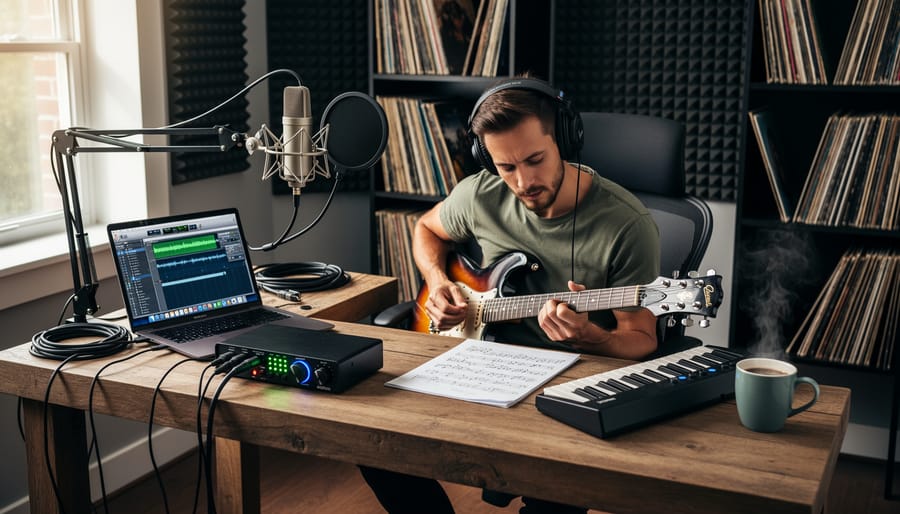
Ask ten Canadian musicians what their working week looks like and you’ll get ten different answers. An independent songwriter in Toronto might spend mornings writing and afternoons pitching songs for film and television. A fiddler in Cape Breton could be piecing together festival bookings, teaching lessons, and weekend kitchen parties. A throat singer in Nunavut may share a centuries-old tradition with audiences who’ve never heard it, while a Francophone artist in Quebec builds a following in a language that shapes every lyric.
Add the session players who lend their skill to other people’s records, the producers who shape a sound from behind the glass, and the newcomer artists who bring musical traditions from around the world into Canadian clubs and community halls. Touring acts in rural and northern regions often travel hundreds of kilometres between shows, sometimes by small plane, to reach audiences who rarely get live music at all.
These paths differ in genre, language, geography, and stage of career. What they share is the pursuit itself: a commitment to making music that matters, and the need to keep doing it over the long run.
The Gap Between Passion and Paycheque
Most musicians don’t choose this work for the money. They choose it because writing a song that lands, or locking in with a band on a good night, feels like nothing else. That drive is real, and it’s what keeps people practising after a long day job shift and loading gear into a van at midnight.
But passion and income don’t always move in step. A songwriter can spend months on a piece that moves listeners deeply and still see modest earnings from it, while the bills for rehearsal space, instruments, and travel arrive on schedule. A performer may be booked solid and yet face a quiet stretch where nothing comes in. The creative side asks for patience and risk. The financial side asks for predictability.
That tension is why so many working musicians stitch together several streams: gigs, teaching, session work, royalties. It also explains why money worries can quietly erode the very creativity they’re meant to protect. When rent is uncertain, it’s harder to take artistic chances or rest when you need to. Seeing this link clearly is the first step toward understanding why fair pay and personal well-being belong in the same conversation.
The Pressures Behind the Passion

Irregular Income and Financial Stress
A gig that pays well in March can be followed by a quiet April with nothing booked. That unevenness is one of the most common financial realities of the music life. Performance fees, session work, teaching, and licensing income rarely arrive on a predictable schedule, which makes monthly planning difficult.
Royalties add another layer. Money earned when a song is performed, broadcast, or streamed often reaches the creator months after the use itself, so a songwriter may be waiting on payments that reflect work done long ago.
Meanwhile, costs show up on time. Instruments need repairs, gear gets replaced, studio hours are billed up front, and touring means fuel, accommodation, and lost days of other work. For many independent artists, these expenses come out of pocket before any income is certain.
Taken together, this pattern can create ongoing strain, even for musicians who are working steadily and building a respected body of work.
Touring, Late Nights, and Physical Health
Life on the road is hard on the body. Late load-outs, early drives, and irregular meals can leave sleep chronically short, and that fatigue shows up quickly in the voice, the hands, and the ears.
Hearing is the most easily overlooked risk. Loud stages and long rehearsals can cause lasting damage, often gradually. Musician’s earplugs reduce volume evenly without muffling the sound, and giving your ears quiet breaks between sets helps. Many touring players also have a baseline hearing test done by an audiologist.
For singers, hydration, steady warm-ups, and vocal rest matter more than any quick fix. Talking over noisy venues can strain the voice as much as singing does.
Players of guitar, keys, drums, and strings can develop repetitive-use injuries. Stretching, sensible practice breaks, and good posture while carrying gear all help. If pain or numbness lingers, a health professional can advise on next steps.
Isolation, Self-Doubt, and Creative Burnout
The emotional load of a music career often goes unseen. Hours of solo writing, practising, or driving between gigs can be deeply isolating, and the quiet can turn into self-doubt. Performance anxiety is common even among seasoned players. A single flat night can echo for weeks in your head.
Comparison pressure adds to it. Scrolling past other artists’ releases, tour announcements, and streaming milestones can make your own progress feel small, even though you rarely see the setbacks behind those posts. Over time, constant output and constant self-evaluation can tip into creative burnout, where the work that once energized you starts to feel like a chore.
None of this is a personal failing. It is a recognized part of creative life, and it connects directly to musician wellness. Noticing early signs, such as dread before writing sessions or pulling away from fellow musicians, gives you room to adjust before exhaustion takes hold.
Why Fair Compensation Is a Well-being Issue
Knowing What You’re Owed
Every time a song is performed, broadcast, streamed, or copied, it can generate income, but only if the right information is in the right place. Many musicians and songwriters spend years creating work without a clear picture of where their money comes from, and that gap can quietly cost them.
Start with the basics. A live performance, a radio play, a stream, and a physical or digital copy each trigger different kinds of payment. Understanding reproduction rights is a good first step, since they cover the copying of your music in formats like downloads, discs, and other media. Performing rights work differently, and knowing which applies to a given use helps you spot what you should be paid for.
Registration is where this knowledge pays off. A work that isn’t registered properly, with accurate titles, songwriter splits, and ownership details, can leave royalties unclaimed or delayed. Clear records also support rights transparency so you can see how your music is being used and how payments are calculated.
A practical habit: keep a simple list of every song you’ve written or recorded, who co-wrote it, and where it’s registered. Review it a few times a year, so it stays current as your catalogue grows.
Global Reach, Local Support
When a Canadian song gets played on a radio station in Germany, streamed in Australia, or performed in a café in France, it can earn money for the people who made it. The challenge is making sure that money finds its way home. That’s where international connections matter.
Rights organizations around the world have reciprocal arrangements with one another. Through these agreements, a society in one country collects royalties for use of music in its territory, then passes that money to the society representing the creator elsewhere. A songwriter in Halifax doesn’t need to chase down a broadcaster overseas. The groundwork has already been laid between organizations.
This applies to performers and recording artists too, not only songwriters. Royalties tied to the use of recordings, often called neighbouring rights can also flow across borders when the right registrations are in place.
The practical takeaway is simple. Your music may be earning in places you’ve never visited, but only if your works and recordings are properly registered and your details are current. Accurate metadata is what lets a society abroad match a use of your music to you. Keeping that information up to date is a small task that protects income you’ve already earned.
Everyday Habits That Support a Lasting Music Career
Protect Your Body and Your Instrument
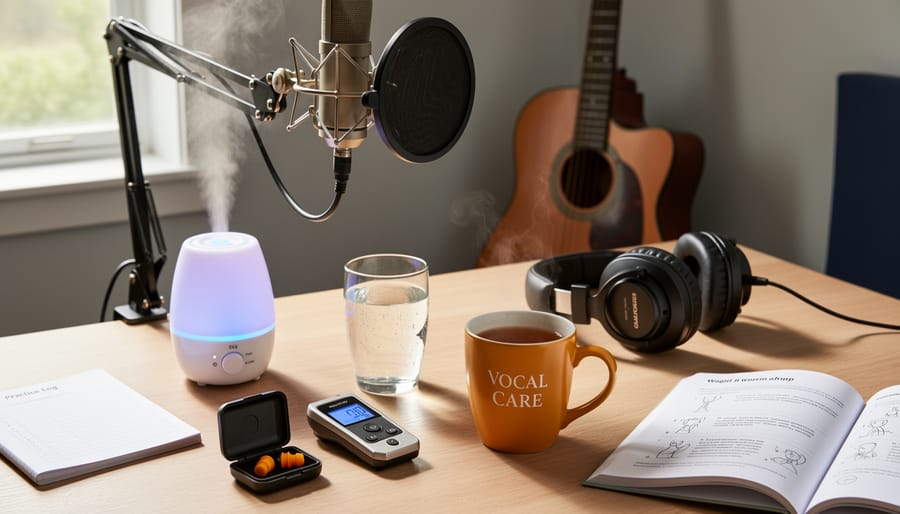
Your hearing is your most valuable tool, and unlike a string or a reed, it can’t be replaced. Loud rehearsals and stage monitors add up over years, so wear musician-grade earplugs that lower volume evenly without muffling the sound. Ask your sound engineer about monitor levels too, and take quiet breaks between sets.
Your voice works the same way, whether you sing or only talk through a long tour. Warm up gently before you perform, drink water regularly, and rest when your voice feels strained rather than pushing through. Strain left unchecked can turn into lasting damage.
Posture matters because hours with a guitar, keyboard, or violin can stress your neck, shoulders, and wrists. Stretch before you play, stand or sit with your weight balanced, and take short breaks during long sessions.
Rest is the habit that makes the others work. Your body repairs itself while you sleep, and plenty of artists now make sleep music precisely because good rest is so closely tied to wellness. Protect your downtime as seriously as you protect your gear.
Build Financial Stability Around Variable Income
Variable income is easier to manage when you can see it clearly. Start by listing every stream you earn from, whether that’s gig fees, teaching, session work, streaming, or performance and mechanical royalties. Tracking each one monthly shows you which sources are steady and which come in unpredictably.
From there, try building a baseline budget around your lowest typical month rather than your best one. When a stronger month arrives, move part of it into a reserve for slower periods, so a quiet winter or a gap between royalty payments doesn’t force hard choices. Separating business expenses like gear, studio time, and travel from personal spending also makes planning, and tax time, less stressful.
Keeping your rights registrations current matters just as much. Works that aren’t registered properly can leave money uncollected, so check your song details and splits regularly.
Every musician’s situation differs, so consider speaking with a qualified financial advisor about decisions specific to you.
Set Boundaries Between Creating and Working
Creative work needs room that isn’t scheduled around a release date or a gig. Set aside regular time to play with no goal in mind: improvise, try an unfamiliar instrument, write a song you never plan to share. That space keeps the craft enjoyable and often feeds your best material.
Promotion and admin work differently. They can expand to fill every free hour, so give them edges. Try a fixed block each week for social posts, emails, invoices and rights registrations, then close the laptop. A defined stopping point protects your evenings and your energy.
Learn your own early warning signs, too. Dreading your instrument, losing interest in music you used to love, constant irritability, poor sleep, or feeling flat after a good show can all signal that burnout is building. Rest, a lighter schedule, or a conversation with a trusted peer or health professional can help before it deepens.
The Power of Community and Advocacy
Isolation is one of the quieter pressures of a music career, and community is one of the most effective ways to ease it. Writing alone, travelling alone and promoting alone can leave even a busy musician feeling disconnected. Regular contact with peers changes that. A fellow songwriter can tell you what a fair co-writing split looks like. A touring friend can tell you which venues treat artists well. A mentor can help you tell a bad week from a real warning sign.
Community is strongest when it is wide. Canada’s music scene spans genres, languages and cultures, and each carries its own traditions and needs. A francophone songwriter in Quebec, an Indigenous artist in the North, a newcomer building a following in Vancouver and a jazz player in Halifax may have little in common musically, yet they often meet the same obstacles around pay, access and visibility. Welcoming people across those lines makes the whole community more resilient, and it brings in perspectives that a narrower circle would miss. Online groups, songwriter circles, regional showcases and local music associations all give artists a way in, including those far from a major city.
Individual connection matters, but so does collective voice. Fair treatment for artists has never come from one person negotiating alone. It has come from musicians, songwriters and their representatives standing together to push for transparent licensing, accurate reporting and proper payment when music is used. Joining a rights organization, taking part in consultations and speaking up when something looks unfair all add weight to that effort.
You do not need to do everything. Start small: attend one local event, reach out to one musician whose work you respect, or ask one question in a community you trust. Each connection makes the next one easier, and a career that feels shared is far easier to sustain.
Frequently Asked Questions About the Music Life
How can I earn income from my music beyond live shows?
Your songs can earn money whenever they’re performed publicly, broadcast, streamed, or reproduced, so registering your works with the right rights organizations matters. Many musicians also add income from licensing for film and advertising, teaching, session work, and merchandise.
What should I do if my royalties seem incorrect?
Start by checking that your works, splits, and personal details are registered accurately, since small errors often cause missing or misdirected payments. Then contact the rights organization that pays you and ask for a breakdown of the statement.
How do I look after my hearing as a performer?
Use properly fitted musician’s earplugs or in-ear monitors, and give your ears quiet recovery time after loud rehearsals and shows. If you notice ringing or muffled sound that lingers, see an audiologist rather than waiting it out.
Where can Canadian musicians find support for mental health and career challenges?
Provincial and national music associations, artist-focused wellness programs, and local musician communities often offer counselling access, mentorship, and peer support. A family doctor or community health service can also point you to confidential help close to home.
None of these answers replaces personal advice, and what works will shift with your genre, career stage, and where you live. The common thread is simple: understand how your music earns, protect your body, and don’t carry the load alone.
A lasting music life rests on three things working together: the creative passion that drew you to music in the first place, the fair pay that lets you keep making it, and the personal well-being that keeps you able to show up. Take away any one of them and the whole structure gets shaky. Pull all three into balance and a career in music becomes something you can sustain for years rather than something you survive.
So start where you are. Learn how your music earns money when it’s performed, broadcast, streamed, or reproduced, and make sure your works are properly registered. Protect your hearing, your voice, and your sleep before the damage is done. Set aside time for creative play that has nothing to do with promotion or admin. And reach out to other musicians, mentors, and advocacy groups, because nobody builds this life alone.
Fair treatment for artists doesn’t happen by accident. It grows when musicians know their rights and speak up together. Moon Face remains committed to standing with Canadian musicians and songwriters, at home and abroad, so that the music you create is valued, protected, and paid for. Your work matters. Keep making it, and take care of yourself while you do.