
Mid-century modern design has outlasted countless trends precisely because it was never built for the moment. Emerging between 1933 and 1969, MCM continues to dominate interiors in 2026, a testament to design principles rooted in function, quality materials, and a timeless aesthetic that refuses to age. For Canadian musicians and creative professionals evaluating workspace investments, MCM offers a rare combination: furniture and layouts that enhance productivity while holding value across decades.
The longevity stems from deliberate choices. Authentic MCM pieces feature real wood like walnut and teak, metal frames, leather upholstery, and durable textiles rather than particle board or synthetic shortcuts. This marriage of industrial textures (steel, glass) with warm organic materials creates spaces that feel both focused and inviting, exactly what you need when logging hours on a mix or working through chord progressions. The signature low, lean profile keeps sightlines open and prevents visual clutter from competing with your creative process.
Beyond materials, MCM’s uncluttered layout and organic flow deliver practical advantages for daily use. The style doesn’t demand constant refreshes or trendy accessories to feel current. After a remarkable 15-year resurgence, MCM has proven it’s not a passing fad but one of the most enduring design movements in modern history. For creatives building long-term home studios or writing spaces, that durability translates directly into smarter spending and environments that support, rather than distract from, the work that matters.
The Enduring Appeal of Mid-Century Modern Design
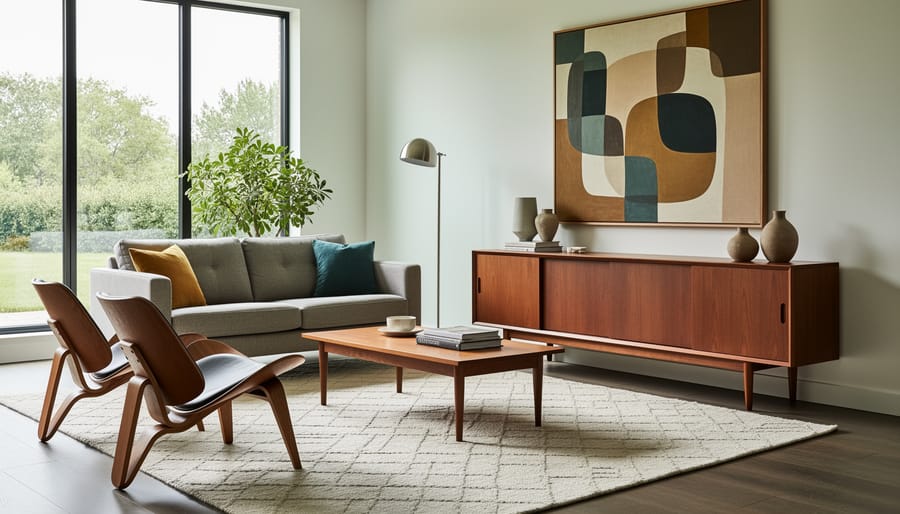
Mid-century modern has defied the typical design cycle where styles rise, peak, and fade into nostalgia. Instead, it’s experienced a remarkable resurgence over the last 15 years, becoming one of the most beloved and enduring design movements for homes, studios, and creative workspaces alike. This staying power isn’t accidental. It stems from principles that prioritize clarity, quality, and human-centered spaces over fleeting trends.
The movement emerged between 1945 and 1969, a period when designers reimagined domestic life for the modern age. They stripped away excess, championed honest materials, and created furniture scaled to real human proportions. What resulted was a visual language that still feels current decades later because it never chased novelty for its own sake.
For musicians and creative professionals, MCM’s appeal runs deeper than aesthetics. The uncluttered layout and organic flow that define the style create warm spaces that remain practical for daily life and focused work. A recording studio or practice room designed with MCM principles doesn’t fight for attention. It provides a calm backdrop that lets creativity breathe.
Interior designers continue choosing mid-century modern because it solves a fundamental problem: how to create environments that feel both inspiring and grounded. The low and lean profile keeps sight lines open. The mix of industrial textures like steel or glass with warm organic materials like walnut and teak balances professionalism with comfort. These aren’t decorative choices. They’re functional decisions that support how people actually live and work, which explains why MCM remains relevant while other movements feel dated within a decade.
What Makes MCM Design Last: Quality Materials and Craftsmanship
Wood: Teak, Walnut, and Other Hardwoods
Teak and walnut earned their reputation in MCM design through sheer resilience. Both hardwoods possess natural oils that resist moisture and everyday wear, which explains why a teak credenza from 1958 can still look stunning in a home studio today. The tight grain patterns in these woods also mean they hold up to the weight of equipment, books, and daily use without warping or splitting over time.
Walnut brings a rich, warm tone that complements the clean lines MCM is known for. Its chocolate-brown hue deepens with age rather than fading, creating character without looking dated. Teak offers similar durability with a lighter golden-brown color and subtle grain variations that work particularly well in spaces where you want visual interest without busy patterns distracting from your creative work.
Beyond these two stalwarts, MCM designers also favored rosewood for its striking grain and oak for structural strength. The key quality all these hardwoods share is density. They’re heavy enough to feel substantial and stable, yet they age gracefully instead of deteriorating. That density also contributes to better acoustics in music spaces, absorbing sound differently than particle board or laminate ever could.
Industrial Materials That Age Gracefully
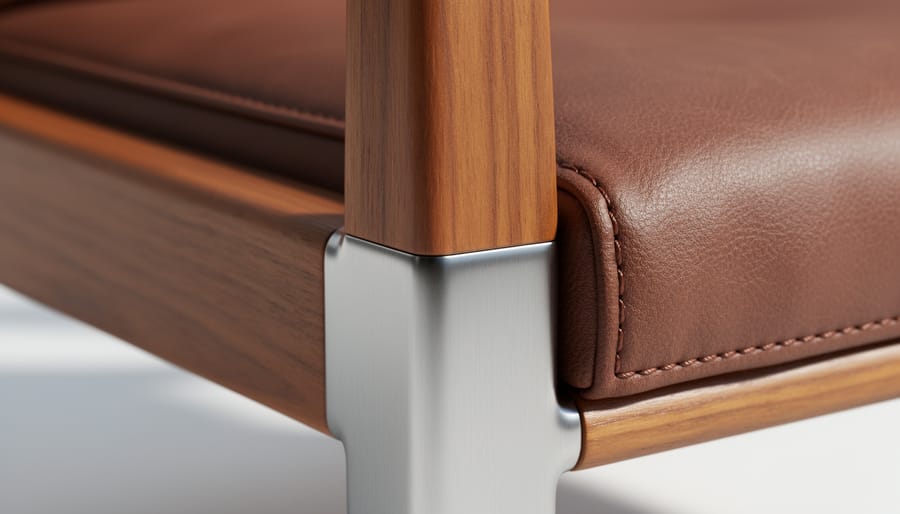
Steel, glass, and metal components bring an industrial edge to MCM interiors that only improves with time. These materials resist warping, cracking, and the structural fatigue that can plague softer furnishings. A powder-coated steel chair frame from the 1950s often looks as sharp today as it did decades ago, and chrome accents develop a subtle patina that adds character rather than looking worn.
Glass tabletops and room dividers maintain their transparency and clean lines with minimal upkeep. They reflect light, making creative workspaces feel open and airy, ideal for musicians who need both focus and inspiration. The mix of industrial textures like steel or glass with warm organic materials like walnut and teak creates contrast that prevents spaces from feeling cold or sterile.
Metal hardware, think brushed brass drawer pulls or exposed steel shelf brackets, ages gracefully, developing a lived-in quality that reinforces MCM’s honest, functional aesthetic. These components don’t pretend to be something they’re not. They’re built to perform, and they do so quietly for years, supporting the uncluttered layout and organic flow that make MCM spaces practical for daily life while remaining visually compelling.
Design Principles That Never Go Out of Style
Uncluttered Layouts for Creative Flow
A cluttered workspace drains creative energy before you’ve played a single note or written a line. MCM’s uncluttered layout tackles this head-on, clearing visual noise so your mind can focus on what matters. When your studio or practice room isn’t competing for attention with excess furniture or decorative distractions, you think more clearly and work more freely.
The ‘low and lean’ profile that defines MCM keeps sightlines open and floors visible. A simple credentialing desk, a well-placed chair, and streamlined storage give you everything you need without the chaos. Musicians juggling instruments, equipment, and sheet music benefit from this minimalist organization: each item has its place, yet the room never feels cramped or rigid.
That organic flow MCM designers prioritized translates directly to creative workflow. You can move between your keyboard, guitar stand, and recording setup without navigating obstacle courses of bulky cabinets or stacked clutter. The space breathes, and so does your process. Successful interior designers choose mid-century modern for exactly this reason, the uncluttered layout creates a warm space that remains practical for daily life, supporting the kind of sustained focus creative work demands without constant tidying or rearranging.
Warmth Meets Functionality
MCM’s genius lies in how it refuses to choose between beauty and usefulness, it delivers both. The warm wood tones, organic textures, and carefully curated accessories create spaces that feel genuinely welcoming, not sterile showrooms. Yet every element serves a purpose. That teak credenza isn’t just handsome; it stores sheet music, cables, and equipment without visual clutter. The low-profile sofa in your practice room invites collaboration during writing sessions while keeping sightlines open.
This dual nature makes MCM particularly valuable for creative professionals who spend long hours in their spaces. The warmth prevents creative burnout that stark, purely functional environments can trigger. The uncluttered layout and organic flow maintain focus without feeling clinical. It’s timeless interior design that adapts to how you actually work, whether you’re composing at 2 AM or hosting a producer for morning coffee.
The industrial textures like steel and glass keep things grounded and practical, while walnut and leather surfaces add tactile richness that makes a room feel lived-in rather than staged. This balance means your workspace remains inspiring year after year without requiring constant updates to feel current.
MCM in Creative Workspaces: Studios and Practice Rooms
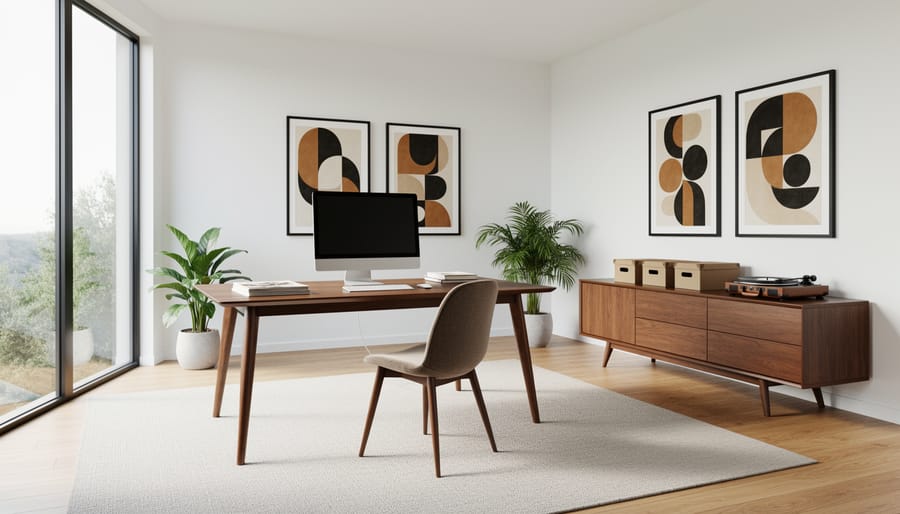
For musicians and songwriters, a studio or practice room isn’t just a workspace, it’s where inspiration meets execution, often for hours at a time. MCM design principles align remarkably well with these demands. The uncluttered layout that defines mid-century modern creates visual calm, letting you focus on the music rather than fighting distraction from busy decor. When you’re tracking vocals at midnight or working through a difficult arrangement, that mental clarity matters.
The ‘low and lean’ profile characteristic of MCM furniture keeps sightlines open and creates a sense of spaciousness even in compact rooms. A low-profile credenza for gear storage, sleek metal shelving for instruments, and a simple walnut desk don’t crowd the room or create acoustic dead zones. This matters when you’re considering practice space setup the furnishings you choose affect both sound and workflow.
Durability is critical in creative spaces. Musicians move equipment, stack cases, and use surfaces hard. Real wood desks handle the weight of monitors and interfaces without sagging. Metal-framed chairs withstand daily use. Leather seating develops character rather than looking worn out. You’re not redecorating every three years because a trend shifted.
The warm materials, teak, walnut, leather, create an inviting atmosphere that matters when you’re spending long sessions alone or working on collaborative design projects with other artists. Steel and glass add a professional edge without feeling cold. This balance between warmth and functionality is why MCM works so well in studios: it’s serious about craft but still feels human, which is exactly what creative work demands.
Investing in Longevity: Authentic vs. Reproduction Pieces
When investing in MCM furniture for your creative workspace, understanding the difference between authentic vintage pieces and quality reproductions helps you make choices that serve both your budget and your long-term vision. Authentic mid-century modern pieces from the 1945-1969 era bring undeniable character and often feature the real wood, metal, leather, and textiles that define the style’s durability. However, well-crafted contemporary pieces designed in the MCM tradition can offer comparable longevity without the hunt or premium price tag.
Look for construction quality regardless of age. Authentic pieces typically feature solid hardwood frames, dovetail joinery, and substantial weight that speaks to materials rather than shortcuts. Examine how drawers slide, how legs attach to the frame, and whether veneers (common in both vintage and reproduction MCM) are thick enough to withstand minor wear. The mixing of industrial textures like steel or glass with warm organic materials like walnut and teak should feel intentional, not decorative, these combinations serve both structural and aesthetic purposes.
Pros
- Authentic vintage pieces offer proven durability after decades of use and retain investment value.
- Original craftsmanship often features superior joinery and solid construction methods rarely replicated today.
- Vintage MCM brings unique patina and character that connects your space to design history.
Cons
- Authentic pieces command premium prices and require patience to source through dealers or estate sales.
- Vintage furniture may need repairs or restoration, adding cost and complication.
- Reproductions offer immediate availability, predictable quality, and often better ergonomics for modern work needs.
For musicians and creatives building productive studios, the best approach often blends both. Invest in one or two authentic statement pieces, a desk, credenza, or seating, that anchor your space with genuine MCM presence. Complement these with thoughtfully chosen contemporary pieces that maintain the style’s uncluttered layout and organic flow while meeting your specific functional requirements. A quality reproduction chair designed for long sessions at your workstation may serve you better than a pristine vintage piece never intended for today’s equipment or work habits.
The value proposition isn’t about authenticity alone, but about choosing pieces built to last and designed to inspire without requiring constant replacement or refinement.
Caring for MCM Spaces: Preservation Without Perfection
One of MCM’s greatest strengths is how forgiving it is over time. Quality pieces made from teak, walnut, and other hardwoods develop a rich patina that adds character rather than diminishing value. Unlike trendy finishes that look dated the moment they show wear, authentic MCM materials age with grace.
When you’re choosing pieces for a creative workspace, look for solid construction and genuine materials. Real wood can handle the bumps and scratches that come with daily use in a busy studio. Steel frames and glass surfaces clean easily and don’t require special treatments to maintain their appeal. The warm organic materials mixed with industrial textures aren’t just aesthetically pleasing, they’re practical.
The uncluttered layout that defines MCM spaces makes maintenance straightforward. Fewer decorative elements mean less to dust, move, or worry about. This minimalist approach suits musicians and creatives who’d rather spend time working than fussing over their environment.
MCM’s low and lean profile also works in your favour. Furniture sits close to the floor, creating visual calm without collecting dust underneath. The organic flow of a well-designed MCM space means you’re not constantly rearranging or updating to keep things fresh.
Accept that wear tells a story. A leather chair that’s shaped itself to your body, wood that’s darkened slightly with age, these aren’t flaws. They’re proof that you’ve invested in pieces built to last through real use, not just to photograph well on day one.
Mid-century modern design has endured not because it chased trends, but because it ignored them. The materials, proportions, and uncluttered layouts that defined the movement between 1945 and 1969 still answer the same fundamental needs in 2026: spaces that inspire focus, accommodate creative work, and feel welcoming without demanding constant reinvention. For musicians and songwriters across Canada and beyond, that means studios and practice rooms that support the work rather than distract from it.
The remarkable resurgence MCM has enjoyed over the last 15 years tells you something important. This is not nostalgia. It is recognition that furniture built from walnut, teak, steel, and leather, and designed with restraint, simply outlasts the churn of fleeting styles. When you invest in authentic pieces or thoughtfully crafted reproductions, you are choosing longevity over disposability. The low and lean profile that made MCM practical in 1960 still makes sense today, especially in creative spaces where clutter competes with concentration.
MCM interior design longevity matters because your workspace should evolve with your practice, not against it. The organic flow and warm textures that define the style create environments where ideas can breathe. For the Canadian creative community and artists everywhere, that is not just good design. It is infrastructure for the long haul, built to last, season after season, without requiring you to start over every few years.