
Beach house interior design creates calm, layered spaces that connect your home to natural coastal landscapes through warm timber, linen, stone, and sun-washed tones rather than nautical clichés. The Modern Collected Coastal approach moves away from themed beach decor and seashell motifs, focusing instead on softened forms, handmade pieces, and textures that look gathered over time. This method works equally well hundreds of miles from the ocean, transforming any space into a serene, light-filled retreat.
The shift reflects a broader movement in interior design toward authenticity and connection. Where traditional coastal style relied on blue-and-white stripes and obvious maritime symbols, today’s approach embraces a coastal living room in shades of gray or warm neutrals, open layouts that invite natural light, and materials that reference the landscape without literally illustrating it. The result feels lived in and effortless, balancing refinement with a relaxed atmosphere that welcomes rather than impresses.
This guide walks you through the full design process: defining the aesthetic, selecting materials, avoiding common pitfalls, and executing a step-by-step transformation. You’ll learn how to layer textures, choose pieces that work together without matching perfectly, and create that airy, breezy quality that makes coastal interiors feel timeless. Whether you’re refreshing a single room or designing an entire home, the principles remain consistent: natural materials, soothing color palettes, and a curated collection that tells a story of place and intention.
What You’ll Need: Materials and Textures for Modern Collected Coastal
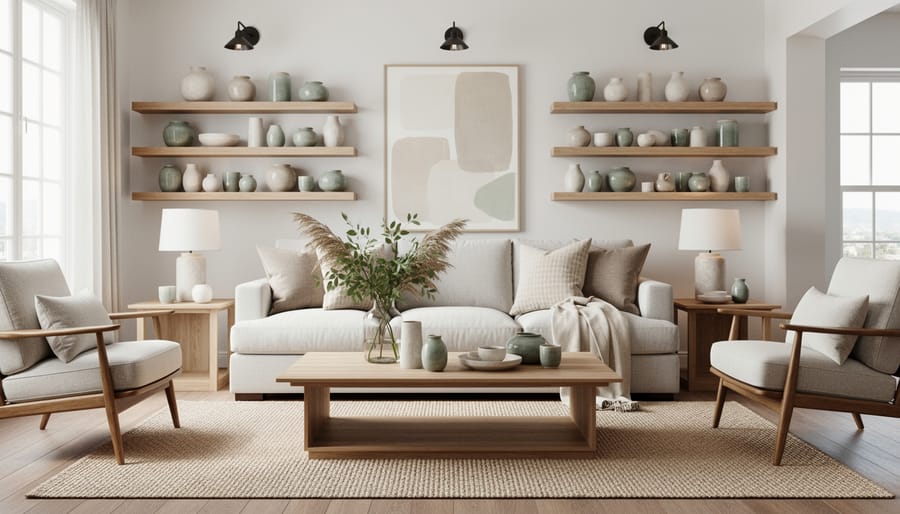
Modern Collected Coastal begins with the materials and textures you bring into your space, each chosen for its connection to natural environments and lived-in authenticity. This is not a checklist where every item must be present, nor a shopping list tied to specific budgets or sources. Instead, think of these elements as the building blocks you gather over time, prioritizing quality and character over matching sets or instant completion.
The foundation lies in natural materials that bring warmth and depth:
- Warm timber in furniture, flooring, or architectural details that ages gracefully and adds organic texture
- Stone surfaces, whether polished or raw, that ground spaces with weight and permanence
- Linen in upholstery, curtains, and bedding that softens interiors with its relaxed drape and natural variation
- Handmade ceramics and artisan pieces that carry the marks of their makers, avoiding mass-produced uniformity
- Woven baskets, rugs, and wall hangings in natural fibers like jute, seagrass, or rattan
- Sun-washed tones and muted palettes, including weathered grays, warm sand, soft whites, and gentle greens
- Muted grays that replace traditional coastal blues and whites for a more refined, contemporary interpretation
The key is layering textures to create contrast and visual interest. Pair rough-hewn timber with smooth stone, drape soft linen over structured seating, set handmade pottery against woven surfaces. This interplay between rough and refined, soft and hard, creates the effortless depth that defines the style.
Resist the urge to source everything at once or achieve perfection in a single room refresh. Modern Collected Coastal earns its name from the feeling that pieces have been gathered thoughtfully over seasons and travels, not purchased in a coordinated set. A vintage chair found at a local market holds more character than a showroom suite. A bowl shaped by a ceramic artist carries more presence than a matched dinnerware collection.
Quality matters more than quantity or price point. One substantial timber dining table will anchor a space more effectively than multiple forgettable pieces. Authenticity shows in materials that wear well, develop patina, and feel honest rather than imitative. This approach builds interiors that feel calm, layered, and genuinely lived in.
Before You Begin: What to Avoid in Coastal Design
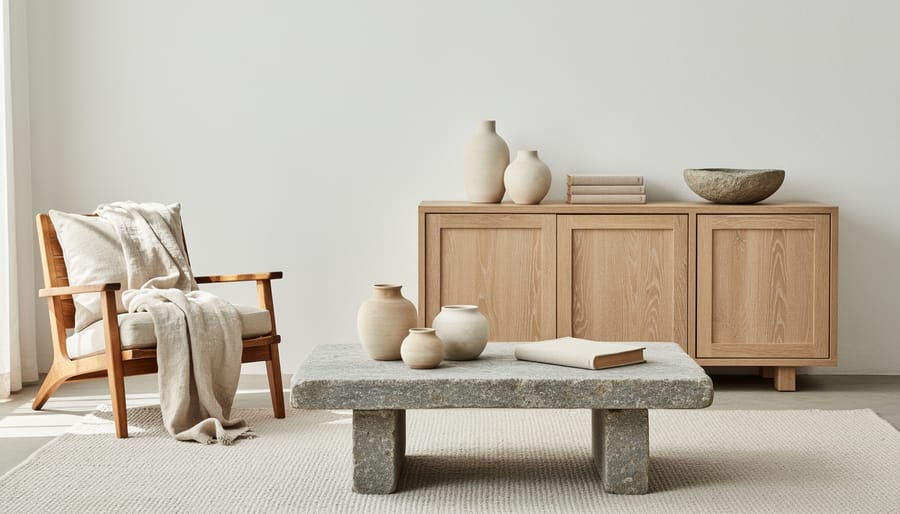
Before you invest time and energy into creating a coastal interior, understand what Modern Collected Coastal is not. This direction rejects the overly themed nautical decor that dominated beach house design for decades, think seagull patterns, anchor motifs, rope accents, and decorative seashells arranged on every surface. Those literal interpretations feel dated and kitschy, lacking the sophistication and restraint that define the current trend.
Equally problematic are perfectly matched furniture sets. When every piece shares the same finish, fabric, and style, the space feels staged rather than lived-in. The Modern Collected Coastal aesthetic values pieces gathered over time, each bringing its own character and texture to the room. A dining table shouldn’t match the sideboard exactly; linen cushions can differ in weight and weave.
Resist overly bright or saturated colors, even if they feel cheerful or traditionally beachy. Turquoise accent walls, vivid coral pillows, and electric blues disrupt the sun-washed, muted palette that creates calm. Instead, think weathered driftwood grays, warm sand tones, and soft whites that feel naturally faded by light and time.
Most importantly, don’t force a beachy aesthetic if it doesn’t suit your home’s architecture, location, or your personal sensibility. A mountain cabin or urban loft can incorporate coastal principles, natural materials, soft textures, airy layouts, without pretending to be a shoreline retreat. This trend is about feeling, not literal geography. If your space feels contrived or uncomfortable, you’ve missed the essence of what makes Modern Collected Coastal work.
Step-by-Step: Building Your Modern Collected Coastal Interior
Step 1: Choose Your Relaxed Coastal Direction
Your first decision shapes everything that follows, but it’s simpler than you might think. Start by observing the natural light in your space, does it flood in all day, creating brightness that calls for cooler tones, or does it feel warm and golden in the afternoons? Let that guide whether you lean toward muted grays and soft whites for a crisp, airy feel, or warm sand tones and sun-bleached neutrals for something earthier and more grounded.
Look at your existing architecture, too. Exposed beams or timber floors might pull you toward warmer, textured coastal palettes, while smooth walls and clean lines could support a cooler, more minimal interpretation. There’s no single right answer, some spaces feel serene in pale grays and weathered whites, while others come alive with honeyed timber and soft terracotta accents.
This isn’t about replicating a literal beach house. You’re creating a feeling: calm, ease, a sense of breathing room. Trust your instincts about what makes your space feel naturally relaxed, and resist the urge to force coastal clichés. The goal is a home that feels like you’ve quietly gathered its elements over time, not one that announces itself as themed decor.
Step 2: Layer Textures and Natural Materials
Start with a single foundational material and build from there. A chunky timber coffee table or weathered dining surface introduces warmth and organic texture that grounds the entire space. Pair it with something smooth and cool, a limestone side table, travertine lamp base, or honed stone accent. The interplay between rough-hewn wood grain and polished mineral surfaces creates the visual depth that separates collected spaces from catalog showrooms.
Linen anchors the soft layers. Slipcovers, cushions, and loose throws in undyed or sun-washed tones add lived-in comfort without fussiness. Woven pieces, rattan chairs, seagrass baskets, jute rugs, bring tactile contrast and handmade irregularity. These imperfections matter. A hand-knotted throw or artisan ceramic vase carries the subtle variation that signals something was chosen, not ordered in bulk.
Think of layering as a slow accumulation, not a weekend project. Add one textured element, live with it, then introduce another. A nubby wool blanket draped over linen. A smooth clay bowl on rough timber. This approach mirrors how a design tool lets you build compositions through iteration, testing, adjusting, refining until the balance feels right.
The goal is contrast that feels effortless. Rough with smooth. Hard with soft. Natural materials gathered gradually, creating spaces that look curated over years rather than assembled overnight.
Step 3: Build a Soothing, Sun-Washed Color Palette
Choose colors that feel sun-bleached and gathered from nature rather than picked from a paint chart. Think weathered driftwood, warm sand after the tide recedes, soft fog rolling in over the water. Sun-washed neutrals anchor the palette, creamy whites, pale taupes, and beige tones that shift with the light. Soft grays have replaced traditional coastal blues and whites in modern interpretations, offering a more refined, sophisticated look that still feels airy and calm.
Muted greens pulled from coastal grasses and weathered blues reminiscent of faded boat paint add subtle depth without overwhelming the senses. The key is keeping hues desaturated and gentle. Avoid overly bright or saturated colors that feel forced or kitsch. Instead, layer tones that seem to have been naturally softened by sun and salt air.
This approach shares common ground with MCM interior design in its restraint and appreciation for honest materials, though coastal leans warmer and more textural where mid-century favors clean lines. Your palette should feel cohesive but not matchy, like pieces collected over years of seaside walks rather than bought in a single shopping trip.
Step 4: Soften Forms and Create Open, Airy Layouts
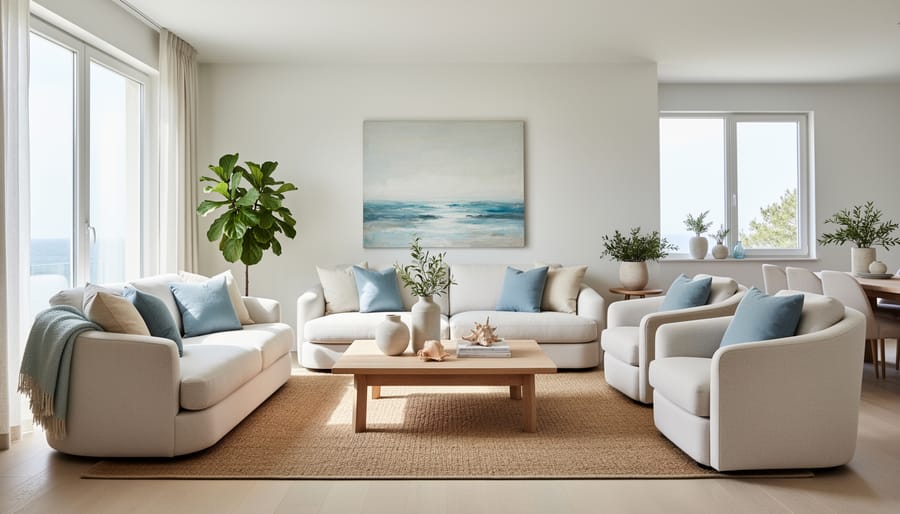
Furniture with rounded edges and organic shapes softens the overall look and feel of a coastal space. Think curved sofas, circular coffee tables, or armchairs with gently sloped arms rather than sharp, angular pieces. These relaxed silhouettes create a sense of ease that reinforces the calm, effortless atmosphere central to Modern Collected Coastal design.
Arranging your space to maximize light and flow is equally important. Position furniture to allow natural light to move freely through the room. Avoid blocking windows or creating visual barriers that make a space feel cramped. Keep pathways clear and furniture placement loose rather than pushed against walls. This open approach lets the room breathe and maintains that airy, uncluttered quality that defines the style.
Resist the urge to fill every corner. Negative space is part of the design. A few well-chosen pieces with soft forms will create more serenity than a fully furnished room with hard lines and tight arrangements. The goal is a layout that feels both lived-in and light.
Step 5: Curate with Intention, Not Perfection
The most meaningful coastal spaces are shaped by personal discovery, not retail lists. Start by gathering objects that carry stories: a handmade ceramic bowl from a local potter, a vintage linen throw found at an estate sale, driftwood collected on a morning walk, or artwork that speaks to your own creative sensibility. These pieces anchor the room in authenticity rather than coordination. Think of yourself as a curator assembling a collection over months and years, not a decorator following a buying guide for a single afternoon.
Resist the impulse to make everything match. Pair rough timber with smooth stone. Let a weathered side table sit beside a new linen sofa. Mix artisan pottery in muted glazes with vintage glass vessels. The goal is layered depth, not showroom precision. Imperfection signals that the space has evolved organically, balancing refinement with the ease of everyday life. This approach creates the calm, lived-in atmosphere that defines Modern Collected Coastal, a home that feels effortless because it was never forced into a single moment of perfection.
How to Know Your Design Is Working
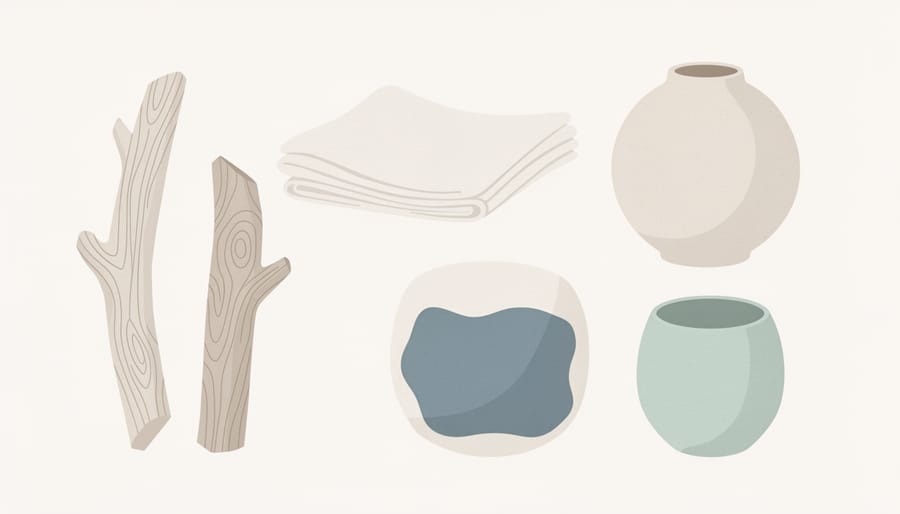
Your design is working when the space feels instinctively calm the moment you walk in. There should be a natural ease, a sense that the room breathes, that light moves through it without obstruction, and that every piece belongs without shouting for attention. If you feel compelled to adjust furniture constantly or add more objects to fill perceived gaps, the balance may be off. Modern Collected Coastal succeeds when it strikes that delicate equilibrium between refinement and ease, where handmade textures and natural materials layer without clutter, and the palette feels sun-washed rather than forced.
Watch for warning signs that suggest you’ve veered too far in one direction. If the room feels too themed, anchors on every shelf, seashells clustered like a souvenir display, you’ve crossed into nautical kitsch. Strip back to essentials and let natural materials carry the coastal feeling. If it feels too sparse or cold, add warmth through linen throws, woven baskets, or a piece of driftwood-textured timber. If it feels too busy, remove rather than rearrange; the design thrives on breathing room and thoughtful curation, not abundance.
Consider your connection to natural light and the landscape beyond your walls. Does the color palette echo the tones you see outside, whether that’s bleached sand, soft gray skies, or weathered stone? Do the textures feel tactile and lived-in, not pristine? If something feels misaligned, fix your layout to improve flow and openness, or adjust your palette toward softer, more muted tones.
Trust that this design evolves organically. Spaces improve as you live in them, gather pieces gradually, and resist the urge to finish everything at once. The markers of success are qualitative: calm, airy, effortless, layered. If your home feels like a place you want to linger, breathe deeply, and let time slow down, you’ve achieved Modern Collected Coastal.
Common Questions About Modern Collected Coastal Design
Can Modern Collected Coastal work in a city apartment?
Absolutely. This approach creates a serene and airy atmosphere even if your home is miles from the shoreline. Focus on natural materials, sun-washed neutrals, and soft textures to bring that calm, light-filled quality into any space, regardless of location.
How is this different from traditional beach house decor?
Modern Collected Coastal moves away from nautical kitsch with seagull patterns and seashells everywhere. Instead, it emphasizes layered textures, softened forms, and a natural connection to the landscape, creating spaces that feel calm, effortless, and lived in rather than overtly themed.
What if I don’t live near the ocean?
You don’t need proximity to water to embrace this aesthetic. The trend is inspired by breezy, light-filled spaces and beach houses, but it translates anywhere through material choices and color palettes. Think warm timber, linen, stone, and sun-washed tones that evoke relaxed coastal living without literal beach references.
Can I mix coastal with other design styles?
Yes. Modern Collected Coastal balances refinement with ease, making it highly adaptable. Layer in vintage finds, contemporary pieces, or global textiles alongside your natural materials and soft color palette. The key is maintaining that effortless, gathered-over-time feel rather than forcing everything to match perfectly.
The beauty of this design philosophy lies in its flexibility. A city loft can feel just as coastal as a seaside cottage when you prioritize the right elements: natural light, organic textures, and a restrained palette. You might use a coastal living room approach with shades of gray instead of typical coastal blue and white, proving the style adapts to diverse settings and personal tastes.
If you’re hesitant about committing fully, start small. Introduce one element at a time, a linen throw, a piece of driftwood-toned furniture, or handmade ceramics. Watch how these pieces interact with your existing decor. The collected nature of this approach means you can build gradually, adjusting as you go without needing to overhaul everything at once.
The distinction from traditional beach themes matters because it gives you creative freedom. You’re not decorating a beach house; you’re capturing a feeling. That means skipping literal nautical symbols and instead choosing pieces for their texture, form, and the ease they bring to a room. A woven pendant light or a rounded oak coffee table can evoke coastal calm far more effectively than anchor motifs ever could.
Modern Collected Coastal beach house interior design isn’t about perfection or proximity to the ocean. It’s about creating spaces that breathe, layered, natural, and genuinely lived-in. Whether your home overlooks crashing waves or sits in the heart of a city, this approach invites you to embrace the values that matter most: authenticity, thoughtful curation, and a deep connection to the natural world.
The spaces you’ve been building throughout this process should feel effortless, not forced. They should welcome you with coastal calm and texture, balancing refinement with ease. If your room doesn’t feel quite right yet, that’s part of the journey. Great interiors evolve organically, shaped by the things you gather, the light that fills your windows, and the life you actually live within those walls.
Trust your instincts. Let your space grow and shift over time. Add pieces that resonate with you, not because they match a checklist, but because they feel true. This design philosophy, rooted in natural materials, softened forms, and sun-washed tones, mirrors the creative practice itself: patient, intentional, and deeply personal. Your home becomes a reflection of how you see and experience the world, one thoughtful choice at a time.